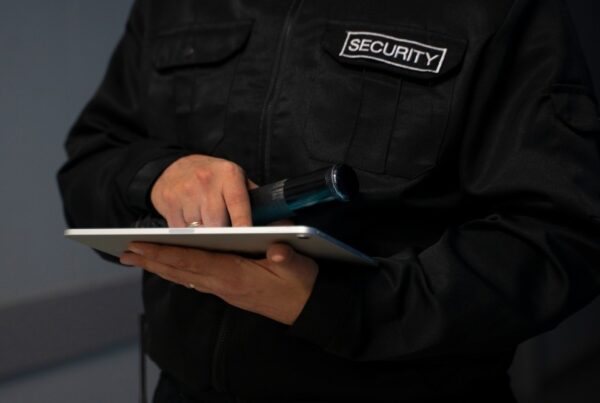

The image of a solitary night watchman walking the perimeter of a building with a simple torch is rapidly fading into history. Across the United Kingdom, technological advancements are reshaping the physical security landscape. Modern security guard services now blend highly trained personnel with cutting-edge tools to create robust, proactive defence systems.
This digital transformation represents a fundamental shift in how businesses protect their assets, employees, and customers. By integrating innovative technology, security providers are moving away from reactive measures toward predictive, highly efficient operations.
In this article, we explore the key technological advancements revolutionising security guard services in the UK. We will examine how artificial intelligence, body-worn cameras, real-time reporting, and drones are enhancing operational efficiency, improving officer safety, and delivering invaluable data insights for UK businesses.
The Evolution of Security Guard Services
Historically, physical security relied heavily on human observation and manual logging. Guards physically patrolled premises, relying on their senses to detect unusual activity. While the human element remains irreplaceable, relying solely on manual processes left room for human error, fatigue, and delayed response times.
Today, the integration of smart technology empowers security personnel to perform their duties with unprecedented precision. Instead of replacing human guards, technology acts as a force multiplier. It allows security teams to cover larger areas, respond to incidents faster, and make informed decisions based on real-time data. This synergy between human intuition and machine efficiency is setting a new standard for security guard services nationwide.
Key Technologies Driving the Transformation
Several emerging technologies are at the forefront of this industry-wide upgrade. Here is a closer look at the tools transforming how security guard services operate across the UK.
AI-Powered Surveillance Systems
Closed-circuit television (CCTV) has been a necessity in UK security for decades. However, the introduction of artificial intelligence (AI) has turned passive recording devices into proactive security networks.
AI-powered surveillance systems can analyse live video feeds to detect anomalies instantly. Using advanced algorithms, these systems identify suspicious behaviour, such as someone loitering near a restricted access point or an unauthorised vehicle entering a facility. Once the system detects a potential threat, it automatically alerts the on-site security guard services.
This technology drastically reduces the burden on guards who previously had to monitor multiple screens simultaneously. By filtering out false alarms, such as urban wildlife triggering motion sensors, AI allows security personnel to focus their attention exactly where and when it is needed. Furthermore, features like facial recognition and automatic number plate recognition (ANPR) streamline access control, ensuring only authorised individuals enter secure premises.
Body-Worn Cameras for Enhanced Safety
Body-worn cameras have become an essential tool for modern security guard services. Originally adopted by UK police forces, these devices are now widely used in retail, corporate, and event security sectors.
The primary benefit of a body-worn camera is its deterrent effect. When individuals know they are being recorded, volatile situations are far less likely to escalate into physical altercations. This dynamic significantly improves the safety of both the public and the security officers on duty.
In the event that an incident does occur, body-worn cameras provide high-quality, objective audio and video evidence. This footage is invaluable for internal reviews, insurance claims, and police investigations. It also fosters a culture of accountability and professionalism, ensuring that security personnel adhere to the highest industry standards while interacting with the public.
Real-Time Reporting Software
The days of illegible, paper-based incident logs are over. Today, industry-leading security guard services utilise mobile applications and real-time reporting software to manage their operations.
Security officers use handheld devices to log their patrols, report maintenance issues, and document incidents as they happen. These digital platforms often incorporate GPS tracking, allowing control rooms to monitor guard locations in real time. If a guard fails to check in at a designated waypoint, the system automatically flags a potential issue, prompting an immediate welfare check.
For UK businesses hiring security services, real-time reporting offers total transparency. Clients can log into secure portals to view live updates, read incident reports, and review patrol routes. This instant flow of information ensures that stakeholders are always informed about the security status of their facilities, enabling faster decision-making during emergencies.
Aerial Oversight with Drone Patrols
For expansive sites such as industrial estates, construction sites, and large event venues, securing the perimeter presents a massive logistical challenge. Drones, or unmanned aerial vehicles (UAVs), are proving to be a game-changing addition to security guard services.
Drones provide an immediate eye in the sky. Equipped with high-definition and thermal imaging cameras, they can patrol vast areas in a fraction of the time it would take a human officer. If a perimeter alarm is triggered, a guard can deploy a drone to investigate the disturbance safely from a distance.
Thermal imaging allows drones to spot intruders hidden in darkness or dense foliage, a capability traditional patrols simply cannot match. By assessing threats from the air, security teams can formulate a safe and strategic response, minimising the risk to ground personnel.
How Technology Benefits UK Businesses
The adoption of these sophisticated tools goes beyond flashy gadgets; it delivers tangible, measurable benefits to businesses that rely on professional security guard services.
Unmatched Operational Efficiency
Technology streamlines every aspect of security operations. AI surveillance automates threat detection, while real-time software eliminates the administrative burden of paper reporting. This efficiency means that security services can allocate their labour resources much more effectively. Instead of spending hours walking empty corridors, guards can be stationed at strategic pinch points, intervening only when technology flags a verified issue. Businesses ultimately receive a higher level of protection without necessarily having to increase their security headcount.
Improving Officer Safety
The safety of security personnel is paramount. Security work can be dangerous, particularly during night shifts or when managing aggressive individuals. Tools like body-worn cameras de-escalate conflicts, while GPS tracking ensures that lone workers are constantly monitored. If an officer encounters a high-risk situation, real-time communication tools allow them to call for backup instantly. By prioritising the safety of their staff through technology, security guard services reduce staff turnover and maintain a highly experienced workforce.
Data-Driven Insights and Analytics
One of the most profound benefits of modern security technology is the generation of actionable data. Every digital patrol log, AI detection, and access control swipe creates a data point. Over time, security services can analyse this information to identify trends and vulnerabilities.
For example, data analytics might reveal that a specific entrance experiences a high volume of unauthorised access attempts between 2:00 AM and 4:00 AM. Armed with this insight, a business can make informed decisions, such as upgrading the physical locks on that door or adjusting the security guard shift patterns to increase visibility during those hours. This proactive approach allows businesses to allocate their security budgets strategically, addressing verified risks rather than perceived ones.
The Future of the Security Industry
The transformation of security guard services in the UK is far from complete. As technology continues to evolve, we can expect to see even deeper integration between physical guarding and digital systems.
The Internet of Things (IoT) will play a significant role in the near future. Smart building sensors, monitoring everything from temperature fluctuations to structural vibrations, will integrate directly with security software. A sudden drop in temperature could alert a security guard to a broken window before an intruder even breaches the perimeter.
Additionally, we are likely to see the rise of autonomous security robots. While they will not replace human guards, robotic units equipped with sensors and cameras will autonomously patrol predictable routes, such as empty warehouse aisles or car parks. These units will feed live data back to a central control room, where human operators can interpret the information and dispatch human guards if a response is required.
Final Words
The intersection of human expertise and advanced technology is driving a massive evolution in how we protect commercial assets, property, and people. By embracing AI-powered surveillance, body-worn cameras, real-time reporting software, and drone technology, security guard services in the UK are delivering a more efficient, transparent, and proactive level of protection.
For UK businesses, partnering with a forward-thinking security provider is no longer just about meeting compliance standards or ticking a box for insurance purposes. It is about leveraging smart data, optimising operational efficiency, and ensuring the absolute safety of everyone on site.
If you are currently reviewing your corporate security strategy, examine how your provider integrates technology into their daily operations. The best security services seamlessly blend skilled personnel with digital innovation, ensuring your business remains safe, secure, and prepared for the challenges of tomorrow.Do you want to hire an expert security guard services provider? Just contact us for a customised solution.