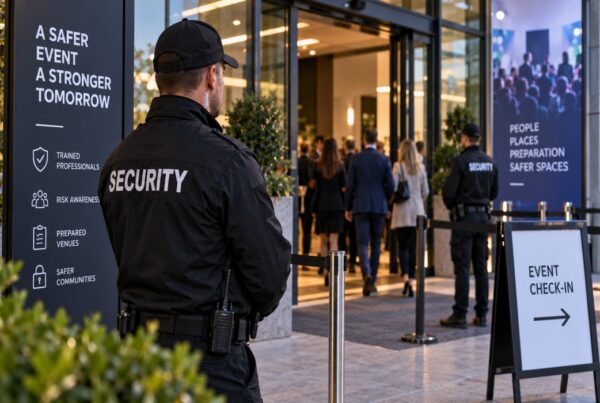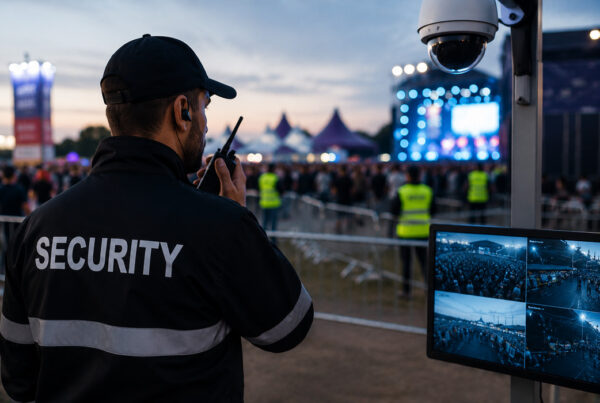


Organising a successful event requires more than just booking a venue and selling tickets. Ensuring the safety of your attendees, staff, and performers is the most critical component of your planning process. At the frontline of this safety operation is the event security guards. These professionals handle crowd management, de-escalate conflicts, and respond to emergencies, making their role both vital and inherently risky.
To protect everyone involved, you must systematically identify and mitigate potential dangers before the doors even open. A comprehensive risk assessment is not just a best practice; it is a legal necessity.
This article will walk you through the essential steps of conducting a thorough risk assessment for an event security guard. You will learn about UK legal requirements, the five fundamental steps of risk evaluation, and how to implement dynamic safety measures to ensure your event runs smoothly and securely.
Understanding UK Legal Requirements
When planning an event in the United Kingdom, event organisers and security managers must comply with strict legal frameworks. The Health and Safety Executive (HSE) provides comprehensive guidelines to ensure workplace safety, and these apply directly to event environments.
Under the Health and Safety at Work etc Act 1974, employers have a legal duty of care to protect the health, safety, and welfare of all employees. This includes any event security guard working on your premises, whether they are in-house staff or hired through a private security firm. Furthermore, the Management of Health and Safety at Work Regulations 1999 explicitly require employers to carry out suitable and sufficient risk assessments.
You must also consider the Security Industry Authority (SIA). Any security guard undertaking licensable activities, such as door supervision, physical intervention, or guarding against unauthorised access, must hold a valid SIA licence. Your risk assessment should account for the specific training and qualifications mandated by the SIA, ensuring that personnel are adequately prepared for the hazards they might face.
The Five Steps of Risk Assessment
The HSE recommends a straightforward, five-step approach to risk assessment. Applying this framework specifically to the role of an event security guard ensures that you cover all bases systematically.
Step 1: Identify the Hazards
The first step is figuring out what could go wrong. A hazard is anything that has the potential to cause harm. For an event security guard, hazards can be physical, environmental, or behavioural.
To identify these hazards, you should:
- Walk the venue: Inspect the site thoroughly. Look for uneven flooring, poorly lit areas, and blind spots.
- Review past events: Analyse incident reports from similar events or the same venue to spot recurring issues.
- Consult your team: Ask experienced security personnel about the challenges they typically face.
- Analyse the event profile: Consider the type of event. A high-energy rock concert presents different hazards compared to a corporate exhibition.
Step 2: Decide Who Might Be Harmed and How
Once you have identified the hazards, determine who is at risk. While the primary focus here is on the event security guard, you must also consider attendees, vendors, and other staff members.
Specify how the harm might occur. For instance, a security guard stationed at a busy entrance might be harmed by a crushing crowd if the queuing system fails. A guard patrolling an outdoor festival might suffer from heat exhaustion or hypothermia, depending on the weather conditions. By detailing exactly how the harm could manifest, you can tailor your safety measures more effectively.
Step 3: Evaluate the Risks and Implement Control Measures
Risk is the likelihood that a hazard will actually cause harm, combined with the severity of that harm. You need to evaluate the level of risk for each hazard and decide what control measures are necessary to mitigate it.
Ask yourself what you are already doing to minimise the risk, and whether you can do more. The goal is to reduce the risk to the lowest reasonably practicable level. We will explore specific control measures for common security hazards later in this article.
Step 4: Record Your Findings and Implement Them
If your organisation has five or more employees, you are legally required to write down your risk assessment findings. However, even if you have fewer staff, documenting your assessment is highly recommended.
Your record should clearly show that:
- A proper check was made.
- You asked who might be affected.
- You dealt with all obvious significant hazards.
- The precautions are reasonable, and the remaining risk is low.
- You involved your staff or their representatives in the process.
Share this document with every event security guard during their briefing. A risk assessment only works if the people facing the risks actually know about the control measures.
Step 5: Review and Update the Assessment
Events are fluid, and circumstances change. Your risk assessment should not be a static document that sits in a drawer. You must review it regularly, especially if you introduce new equipment, change the venue layout, or receive new information about potential security threats.
Update the document to reflect these changes and ensure your control measures remain effective.
Identifying Specific Hazards for Event Security Guard
To conduct a robust assessment, you must understand the specific threats an event security guard encounters. These generally fall into two main categories: crowd control and venue safety.
Crowd Control Hazards
Managing large groups of people is arguably the most challenging aspect of event security. Human behaviour is unpredictable, and crowds can quickly become dangerous.
- Crushing and Trampling: Poorly managed queues, sudden rushes towards a stage, or panic during an evacuation can lead to severe crushing injuries.
- Aggression and Violence: Intoxication, frustration over long queues, or disputes between attendees can escalate into physical violence. An event security guard often has to intervene, placing them at direct risk of assault.
- Projectiles: At concerts or sporting events, unhappy or over-excited crowds might throw objects (bottles, flares, etc.), posing a significant risk to security staff positioned near the stage or pitch.
Venue and Environmental Hazards
The physical environment of the event also presents numerous risks that you must assess and control.
- Noise Exposure: Security personnel working near speakers or in loud arenas risk permanent hearing damage if exposed to high decibel levels for prolonged periods.
- Trip and Fall Hazards: Cables, temporary fencing, wet floors, and uneven ground can cause slips and trips.
- Weather Conditions: For outdoor events, guards face exposure to extreme heat, cold, rain, or high winds. This can lead to dehydration, heatstroke, or hypothermia.
- Poor Lighting: Operating in dark environments increases the risk of trips, makes it harder to spot suspicious behaviour, and increases the vulnerability of the guard.
Implementing Effective Control Measures
Once you have evaluated the risks, you must put practical control measures in place to protect your security team.
Enhancing Crowd Management
To mitigate risks associated with crowd control, implement robust physical and procedural barriers.
- Barriers and Fencing: Use high-quality, load-bearing barriers (such as Mojo barriers) in high-pressure areas like the front of a stage. Ensure queuing systems use clearly defined, winding lanes to prevent forward crushing.
- Capacity Monitoring: Strictly enforce venue capacity limits. Use clickers or digital scanning systems to track the number of people in specific zones.
- Conflict Resolution Training: Ensure every event security guard receives advanced training in de-escalation techniques. Physical intervention should always be a last resort.
- Strategic Placement: Never leave a guard isolated in a high-risk area. Always deploy personnel in pairs or teams, especially at access control points and bars.
Improving Venue Safety
Address physical and environmental hazards with appropriate equipment and site planning.
- Personal Protective Equipment (PPE): Provide high-visibility clothing for easy identification. Supply ear protection for guards stationed in high-noise areas, and ensure outdoor staff have appropriate weather-resistant gear.
- Communication Systems: Equip all security staff with reliable two-way radios and earpieces. Clear communication is vital for requesting backup and coordinating emergency responses.
- Lighting and Signage: Ensure all patrol routes and emergency exits are well-lit. Use clear signage to direct attendees, reducing confusion and frustration.
- Scheduled Breaks: Fatigue leads to poor decision-making. Implement a strict rotation programme to ensure guards receive adequate rest and hydration breaks.
The Role of Dynamic Risk Assessment
While a formal, written risk assessment is essential during the planning phase, it cannot account for every unpredictable variable during the live event. This is where dynamic risk assessment becomes crucial.
Dynamic risk assessment is the continuous process of identifying hazards and evaluating risks as they happen in real-time. Every event security guard should be trained to constantly scan their environment and adapt their approach based on developing situations.
For example, if a guard notices a crowd becoming overly agitated near a specific exit, a dynamic risk assessment dictates that they should not wait for an incident to occur. Instead, they should immediately communicate the changing situation to the control room, request additional support, and take proactive steps to diffuse the tension.
Encourage a culture where security personnel feel empowered to make on-the-spot safety decisions. Regular radio check-ins and a strong chain of command help facilitate rapid responses to emerging threats.
Final Words
Conducting a comprehensive risk assessment is a foundational element of event planning. It protects your attendees, safeguards your business from legal liabilities, and most importantly, ensures that every event security guard can perform their duties safely.
By following the UK HSE guidelines and breaking down the process into the five essential steps, you can systematically identify and mitigate hazards. Remember to focus heavily on the specific challenges of crowd control and venue safety, implementing robust control measures like proper equipment, strategic deployment, and effective communication.
Finally, treat your risk assessment as a living document. Review it regularly, adapt it to new circumstances, and train your team to rely on dynamic risk assessment during the event itself. By prioritising these safety protocols, you create a secure environment where your staff can thrive, and your attendees can enjoy a memorable, incident-free experience.Do you want to hire a top-notch event security guard? Just contact us for the ultimate protection.