
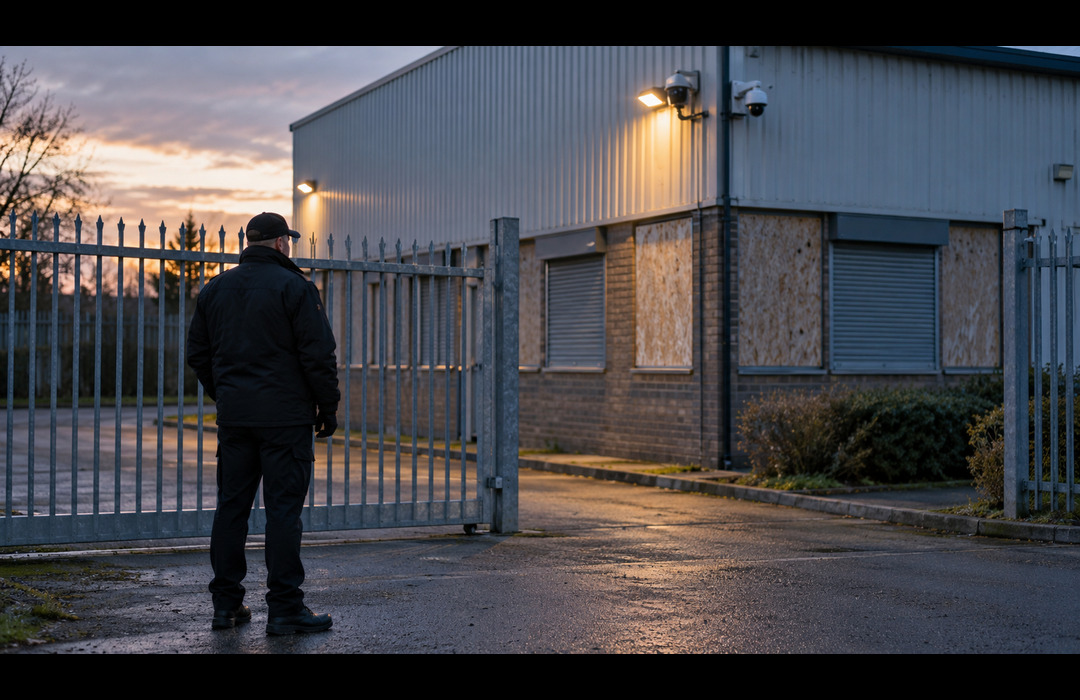
A property doesn’t need to be empty for long before it starts to look empty. Post piling up behind the letterbox. No lights on at dusk. A “To Let” board that’s been up two seasons too long. To most passers-by, none of that means much. To someone looking for somewhere to break in, sleep rough or cause damage without being seen, it’s an invitation. That’s why security guard services matter.
Empty buildings are one of the most overlooked risks in property management, and one of the most expensive to get wrong. Squatters can be genuinely difficult to remove once they’re inside. Vandalism escalates fast once a building starts to look neglected. And many owners only discover their insurance no longer covers either problem after something has already gone wrong.
This article looks at what actually happens when a property sits empty, what UK law really says about squatting (it isn’t what most people assume), and how professional security guard services close the gap between “empty” and “vulnerable.” Whether you’re managing one vacant unit or a portfolio of them, the goal is the same: keep the property looking, and being, occupied in every way that matters.
Why Vacant Properties Are Such an Easy Target
Empty buildings send out signals, and they do it constantly. No cars in the car park. Curtains that never move. A meter that never gets read. Anyone casing a street for an easy target, whether that’s a squatter looking for shelter, a thief after copper pipework, or someone with a can of spray paint, reads these signals in seconds.
The scale of the problem is bigger than most people realise. According to Action on Empty Homes’ analysis of government council tax data, England now has more than 300,000 long-term empty homes (properties unoccupied for six months or more), the highest level since 2011.
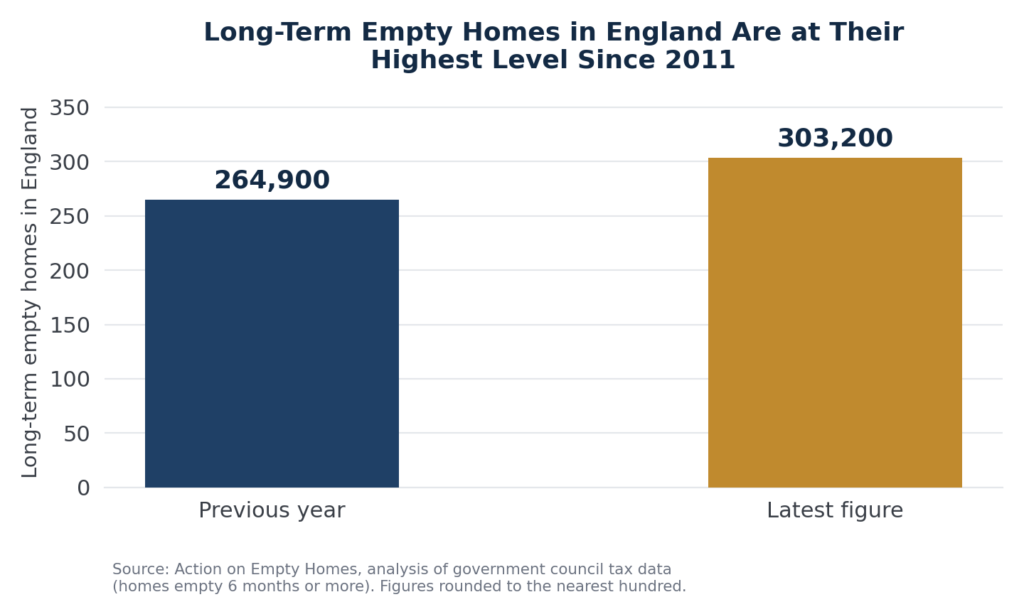
Figure 1. Long-term vacancy in England has climbed back above its 2011 peak.
That figure covers residential property alone. Add in vacant commercial units, offices between tenants, construction sites and land awaiting development, and the true number of unguarded vacant properties across the UK is considerably higher. Every one of these carries the same basic risks: unauthorised entry, squatting, vandalism, metal theft, fire and water damage, and in the worst cases, months of legal and financial fallout. The type of property changes the detail, but not the underlying vulnerability.
Squatting in the UK: What Property Owners Actually Need to Know
Squatting is one of the most misunderstood areas of UK property law, and the confusion cuts both ways. Some owners assume they can simply change the locks and remove anyone inside. Others assume the police will always deal with it. Neither is reliably true, and which one applies depends entirely on what kind of property you own.
Residential Property: A Criminal Offence
Since 1 September 2012, squatting in residential property has been a criminal offence in England and Wales under Section 144 of the Legal Aid, Sentencing and Punishment of Offenders Act 2012. Anyone who enters a residential building as a trespasser and lives there, or intends to, can face up to six months in prison, an unlimited fine, or both (the often-quoted £5,000 cap was removed back in 2015). The offence covers any building designed or adapted as a home, including one that has stood empty for years. Because it’s a criminal matter, the police can attend, arrest and remove the occupiers directly.
Commercial Property: A Civil Matter
Offices, shops, warehouses and land are treated completely differently. Squatting in non-residential property is not, in itself, a criminal offence. It’s a civil matter, which means the police will usually decline to get involved beyond taking a report, and the owner has to apply to the county court for a possession order to have occupiers removed lawfully. This is precisely why commercial and industrial buildings, rather than homes, have become the more common target for organised squatting since 2012.
What You Can (and Can’t) Do About It
However frustrating it is to find someone occupying a building you own, you cannot legally force your way in or use threats to remove them yourself. Doing so risks committing an offence under the Criminal Law Act 1977. The lawful route for commercial property is an Interim Possession Order: once correctly served, occupiers have 24 hours to leave, and remaining after that point becomes a criminal offence in itself, ahead of a full possession hearing weeks later. Leave a property unsecured and unchallenged for long enough and, in rare cases, continuous occupation can even lead to a squatter claiming ownership through adverse possession after ten years for registered land or twelve for unregistered land.
Table 1. Squatting in the UK: Residential vs Commercial Property
| Aspect | Residential property | Commercial / non-residential property |
|---|---|---|
| Legal status | Criminal offence (Section 144, LASPO 2012) | Civil matter, not a criminal offence in itself |
| Who can remove occupiers | Police can attend, arrest and remove | Owner must apply to court for a possession order |
| Maximum penalty for squatter | Up to 6 months’ imprisonment, unlimited fine | No criminal penalty for squatting itself |
| Typical route to eviction | Police-led removal | Interim Possession Order or standard possession proceedings |
| Owner’s self-help options | Cannot force entry or use threats | Cannot force entry or use threats |
The practical lesson is the same regardless of property type: professional security, not a slow legal process, is what keeps squatters out in the first place.
Vandalism: The Damage That Isn’t Always Obvious
Vandalism rarely announces itself with a single dramatic incident. It creeps in: a smashed window here, graffiti there, a fence panel kicked through. Criminal damage remains one of the most commonly recorded crime types in England and Wales; police recorded 435,073 criminal damage offences in the year to June 2025, and empty buildings are disproportionately represented in that figure because they’re simply easier and safer targets to hit.
There’s a well-documented pattern behind this. Once a building shows the first sign of damage, whether that’s a broken pane of glass or graffiti left unremoved, it becomes more likely to attract further damage, not less. Criminologists call this the “broken windows” effect: visible neglect signals that nobody is watching, and nobody will mind. For a vacant property, that means the cost of the first incident is rarely the real cost. It’s the acceleration that follows.
Beyond the cosmetic damage, vandalism to a vacant property often causes secondary harm that costs far more to put right: stripped copper piping, stolen roof lead, pipework smashed and left to flood a building over a weekend, or a fire exit forced open and left exposed to the weather for months.
The Insurance Problem Nobody Mentions Until It’s Too Late
Here’s the part that catches out even experienced landlords. Standard buildings insurance is written on the assumption that someone lives in or regularly uses the property. Most policies only cover a property that’s been unoccupied for around 30 days; leave it empty for longer without telling your insurer, and cover for theft, vandalism and malicious damage can be reduced or withdrawn altogether, often at exactly the point you need it most.
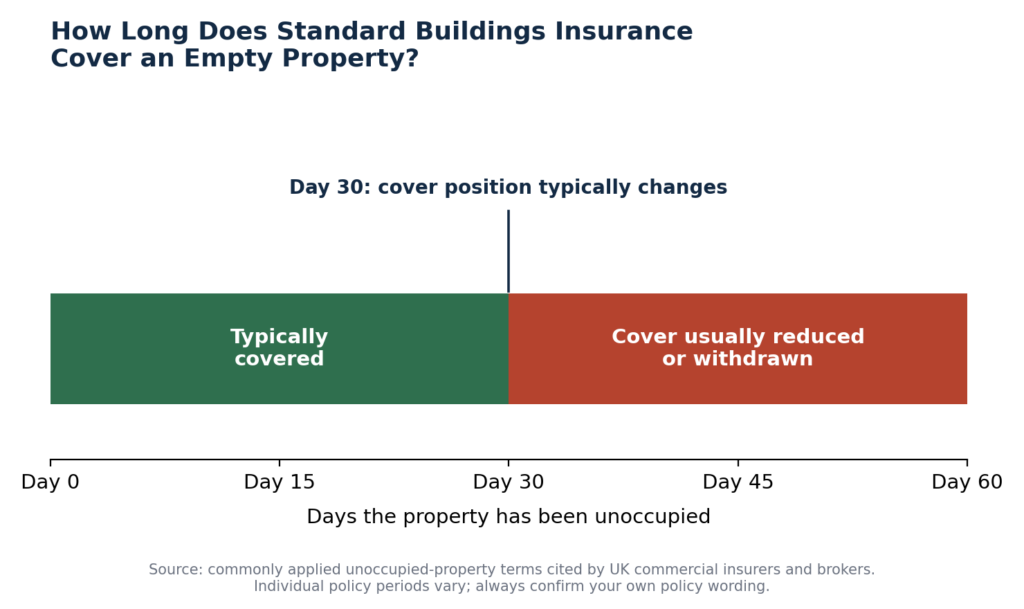
Figure 2. The 30-day mark is when most standard policies change position on an empty property.
To keep cover in place, insurers typically expect owners to meet a specific set of conditions. Table 2 sets out the ones that come up most often.
Table 2. Common Conditions for Unoccupied Property Insurance
| Condition | What it usually means |
|---|---|
| Notify your insurer | As soon as the property becomes vacant, not after 30 days |
| Weekly inspections | A responsible person checks and logs the property at least every 7 days |
| Secure locks and shutters | Often to a specific standard, such as LPS 1175 |
| Alarm and CCTV active | Systems tested, monitored and able to trigger a response |
| Utilities managed | Gas, water and electricity shut off at the mains unless needed for security or frost protection |
| Site kept tidy | Post, waste and overgrown vegetation cleared to avoid a neglected appearance |
Two points are worth flagging specifically. First, Property Owners’ Liability cover doesn’t stop just because a building is empty; your duty of care to the public, and even to trespassers, continues, so a badly secured vacant site can leave you liable for an injury as well as for the damage itself. Second, “a responsible person inspecting weekly” is doing a lot of work in that condition. For a single property, a director popping past on a Sunday might just about cover it. For a portfolio, it’s exactly the kind of task best handed to a professional provider who can prove, with logged visits, that it’s happened.
How Professional Security Guard Services Actually Close the Gap
Knowing the risks is one thing. Closing them without needing to staff an empty building around the clock is another. In practice, most vacant property security programmes combine a small number of security guard services, chosen to match the specific risk rather than applied as a blanket solution.
Manned Guarding for High-Risk or High-Value Sites
For large sites, listed buildings or properties in areas with a known squatting or theft problem, an on-site guard remains the most direct deterrent available. A visible, uniformed presence removes the “nobody is watching” signal that both squatters and vandals rely on, and lets a provider respond to an incident in real time rather than after the fact.
Mobile Patrols for Everyday Coverage
For most vacant properties, round-the-clock static guarding is more than the risk justifies. Scheduled, randomised mobile patrols cover multiple sites at a fraction of the cost, checking doors, windows and fencing on each visit and logging what they find. Randomising the visit times matters more than it sounds: a predictable patrol pattern is one a determined squatter or thief will simply work around.
For example, a developer holding six empty units across a town centre while planning permission is finalised doesn’t need six guards. A single mobile patrol contract, visiting each site at varying times through the day and night, achieves most of the same deterrent effect for a fraction of the cost, with an immediate response built in if something is found.
Keyholding and Alarm Response
An alarm that nobody answers is barely an alarm at all. Keyholding services mean a trained responder, not the property owner at midnight, attends the site whenever an alert is triggered, assesses the situation and liaises with police where necessary. This is also one of the specific conditions many unoccupied property insurers now expect to see in place.
CCTV and Remote Monitoring
The security camera installation does two jobs at once. It gives a monitoring team eyes on the property between physical visits, and it creates the kind of timestamped evidence that both the police and your insurer will ask for if something does happen. For unattended sites, that record can be the difference between a claim paying out and a claim being disputed.
K9 Patrols for High-Risk Sites
For large industrial units, construction sites or sites with a history of repeated break-ins, K9 Security or a patrol dog adds a level of deterrence and detection that cameras alone can’t match, particularly across open land or multi-building sites where a human patrol on foot takes far longer to cover.
Table 3. Matching Security Measures to Vacant Property Risks
| Risk | Recommended service |
|---|---|
| Squatters entering an empty building | Manned guarding, mobile patrols, secure entry points |
| Vandalism and graffiti | Mobile patrols, CCTV, rapid response |
| Metal and equipment theft | K9 patrols, manned guarding, CCTV |
| Triggered alarms out of hours | Keyholding and alarm response |
| Fire, flood or weather damage going unnoticed | Scheduled inspections, remote monitoring |
| Insurance non-compliance | Documented patrols and keyholding logs |
A Quick Action Checklist If You Own or Manage a Vacant Property
- Notify your insurer the moment a property becomes vacant, not thirty days later when it’s easy to forget.
- Secure the obvious entry points first: doors, ground-floor windows, and anywhere a fire exit could be forced.
- Arrange a documented weekly inspection, whether that’s your own staff or a provider who can log and evidence every visit.
- Keep up appearances. Clear post, cut back overgrown vegetation, and deal with the first piece of graffiti or damage immediately, before it invites more.
- Know your legal route in advance. If your property is commercial, understand that removing occupiers means a court order, not a locksmith.
- Match the service to the site. A single empty shop may need little more than a mobile patrol and keyholding; a large development site may justify manned guarding or K9 support.
Frequently Asked Questions About Vacant Property Security
Can I legally remove squatters myself?
No, not by force. Using or threatening violence to enter a property where someone is present and objecting is itself an offence under the Criminal Law Act 1977, whatever the circumstances. Residential squatters can be removed by police because squatting there is a criminal offence; commercial squatters must be removed through a court order.
How quickly can squatters be removed from a commercial property?
With an Interim Possession Order correctly served, occupiers have 24 hours to leave before remaining becomes a criminal offence, with a full possession hearing following some weeks later. Without one, standard possession proceedings can take considerably longer, which is why prevention through security guard services is usually far cheaper than eviction.
Will my normal buildings insurance cover an empty property?
Usually only for a limited period, often around 30 days, after which standard cover for theft, vandalism and malicious damage is commonly reduced or withdrawn unless you arrange specialist unoccupied property insurance and meet its conditions.
What is the cheapest way to secure a vacant property?
For most low to medium risk properties, a combination of mobile patrols and keyholding offers strong protection without the cost of a full-time on-site guard. Higher-risk or higher-value sites usually justify manned guarding or additional measures such as CCTV and K9 patrols.
Does a visible security presence actually reduce vandalism?
Yes. Vandalism and opportunistic break-ins are largely driven by the perceived absence of anyone watching. A uniformed patrol, active CCTV and a well-maintained appearance all remove that signal, which is why professionally secured vacant properties are targeted far less often than obviously neglected ones.
Final Words
An empty property is not a paused property. Every week it sits unsecured, the risks of squatting, vandalism, theft and an invalidated insurance policy keep compounding quietly in the background. The legal process for putting things right after the fact is slow, expensive and stacked with conditions most owners only discover once it’s too late.
Professional security guard services exist to make sure you never need that legal process at all: a visible presence, a documented patrol history, and a responder who actually turns up when the alarm goes off.
At GSS Security Services, we build vacant property programmes around the specific risk in front of us rather than a standard package, combining manned guarding, mobile patrols, keyholding, CCTV and K9 support as the site requires. If you have a property standing empty right now, get in touch for a site assessment before it becomes a much bigger problem than a few missed patrols.