Introduction
New Year’s Eve is the most celebrated night of the year. From intimate venue parties to massive outdoor celebrations, thousands of events across the UK bring people together to ring in the new year. Yet this joyous occasion presents significant security challenges that organisers cannot afford to ignore.
Late hours, elevated alcohol consumption, and exceptionally high attendance create a unique risk environment. Without proper security planning, what should be a festive celebration can quickly escalate into a crisis injuries, property damage, overcrowding incidents, or worse.
This comprehensive guide explores essential security planning for New Year’s Eve events. We’ll cover risk assessment, staffing requirements, regulatory compliance, and practical strategies to ensure your guests celebrate safely whilst having an unforgettable night.
Why New Year’s Eve Demands Special Security Attention
New Year’s Eve isn’t just another event. The combination of factors makes it statistically one of the highest-risk nights for event organisers across the UK.
The Perfect Storm of Risk Factors:
Extended Operating Hours: Events often run from early evening through the midnight celebration, sometimes into the early morning hours. Longer operating periods naturally increase exposure to incidents.
Elevated Alcohol Consumption: New Year’s Eve involves significantly more drinking than typical weekend events. Alcohol impairs judgment, reduces inhibitions, and increases conflict probability. Security staff must be trained to identify warning signs early and employ de-escalation rather than confrontation.
Exceptional Crowd Density: People plan New Year’s Eve celebrations weeks in advance. Attendance often exceeds normal venue capacity expectations. High crowd density creates conditions for surging, crushing, falls, and panic scenarios.
Peak Energy at Midnight: The countdown to midnight creates a flashpoint when celebratory energy peaks simultaneously across your entire venue. Unmanaged crowd movements at this moment pose exceptional safety risks.
Impaired Guest Judgment: Intoxicated guests may ignore safety instructions, block emergency exits, or become hostile when challenged. This unpredictability demands experienced security teams.
As noted by security professionals, “Late hours, alcohol and high footfall combine to make New Year’s Eve one of the highest-risk nights for event organisers.” This reality demands comprehensive, professional security planning.
The UK Security Market: Understanding the Landscape
Understanding the UK security industry helps organisers appreciate the importance of professional, regulated services for events like New Year’s Eve.
Market Overview:
The UK private security services industry comprises thousands of SIA-licensed providers ranging from small independent contractors to large multinational corporations. This market serves banks, retail, events, facilities, and government sectors across the country.
Key Market Statistics:
• The UK security industry has experienced consistent growth, with private security services representing one of the fastest-growing sectors in the country • SIA licensing ensures rigorous vetting, training standards, and professional accountability • Event security specifically has expanded significantly as organisations prioritise attendee safety and regulatory compliance • Major UK cities see thousands of regulated security personnel deployed during peak seasons, particularly around holidays like New Year’s Eve
This ecosystem of professional, regulated security providers ensures organisers have access to properly trained, vetted personnel critical for New Year’s Eve events.
Risk Assessment: The Foundation of Secure Events
Every event is unique, and security planning must be tailored to your specific circumstances. A formal risk assessment is your first critical step.
Essential Questions for Your Risk Assessment:
Venue Characteristics: How many guests will attend? What’s the physical layout? Are there multiple floors, outdoor areas, or confined spaces? What are ingress/egress points?
Guest Profile: Are attendees primarily locals or will they travel from outside the area? What age ranges will attend? Will the event attract first-time visitors unfamiliar with the venue?
Alcohol Service: Will you serve alcohol? What’s the planned consumption volume? Do you have trained bar staff? What’s your policy on refusing service to intoxicated guests?
Entertainment: Will you have live performers, DJs, or pyrotechnics? Do performers require protection? Could entertainment draw particularly enthusiastic crowds?
External Factors: Are there nearby events that could create crowd overflow? What’s the weather forecast? Are there known tensions in the local community?
Historical Data: Have similar events at your venue experienced issues? What security measures have worked previously?
Document Your Assessment
Create a formal written risk assessment. This documentation serves multiple purposes: it ensures thorough thinking, demonstrates duty of care compliance, and provides a baseline if incidents occur. Include identified hazards, probability assessments, severity ratings, and mitigation strategies.
Security Staffing: Getting the Right Ratio
How many security personnel do you actually need? This critical question determines both safety outcomes and budget requirements.
Industry-Standard Staffing Ratios:
| Event Type | Recommended Ratio | Example (500 Guests) |
| Standard Indoor (No Alcohol) | 1 per 100-150 guests | 3-5 staff |
| Indoor with Alcohol | 1 per 75-100 guests | 5-7 staff |
| Outdoor Event | 1 per 50-75 guests | 7-10 staff |
| High-Risk Event (NYE with Alcohol) | 1 per 50 guests or lower | 10+ staff |
Source: Imperial Security Industry Guidelines 2026
Why New Year’s Eve Requires Higher Ratios:
New Year’s Eve events combine multiple high-risk factors: alcohol service, extended hours, peak crowd density, and the midnight countdown flashpoint. These factors demand staffing ratios at the higher end or exceeding standard recommendations.
A 500-guest New Year’s Eve event with alcohol should employ minimum 10 trained security personnel potentially more if the venue layout creates sightline challenges or if you anticipate particularly enthusiastic crowds.
Security Guard Costs: Understanding 2026 Pricing
Professional security doesn’t come cheap, but cutting corners creates unacceptable risks. Understanding current market rates helps you budget realistically.
2026 UK Security Guard Hourly Rates:
| Role | Typical Rate (£/hour) | 8-Hour Event Cost |
| Standard Security Guard | £16-£25 | £128-£200 |
| Door Supervisor/SIA-Licensed | £18-£30 | £144-£240 |
| Event Security Specialist | £20-£35 | £160-£280 |
| Close Protection Officer | £25-£75+ | £200-£600+ |
Source: Imperial Security 2026 Pricing Guide
Calculating Your Event Security Budget:
Example: 500-guest New Year’s Eve event with 10-hour operating hours
• 12 SIA-licensed door supervisors @ £25/hour × 10 hours = £3,000 • Supervisory staff/team lead (2 positions) @ £30/hour × 10 hours = £600 • Equipment (radios, signage, barriers) rental/management = £500-£1,000 • **Total estimated cost: £4,100-£4,600**
For a 500-guest event, professional security costs approximately £8-£9 per guest a modest investment considering the liability exposure if something goes wrong.
Critical Security Measures for New Year’s Eve Events
Beyond staffing ratios, specific security measures address the unique challenges of New Year’s Eve.
Entry and Access Control
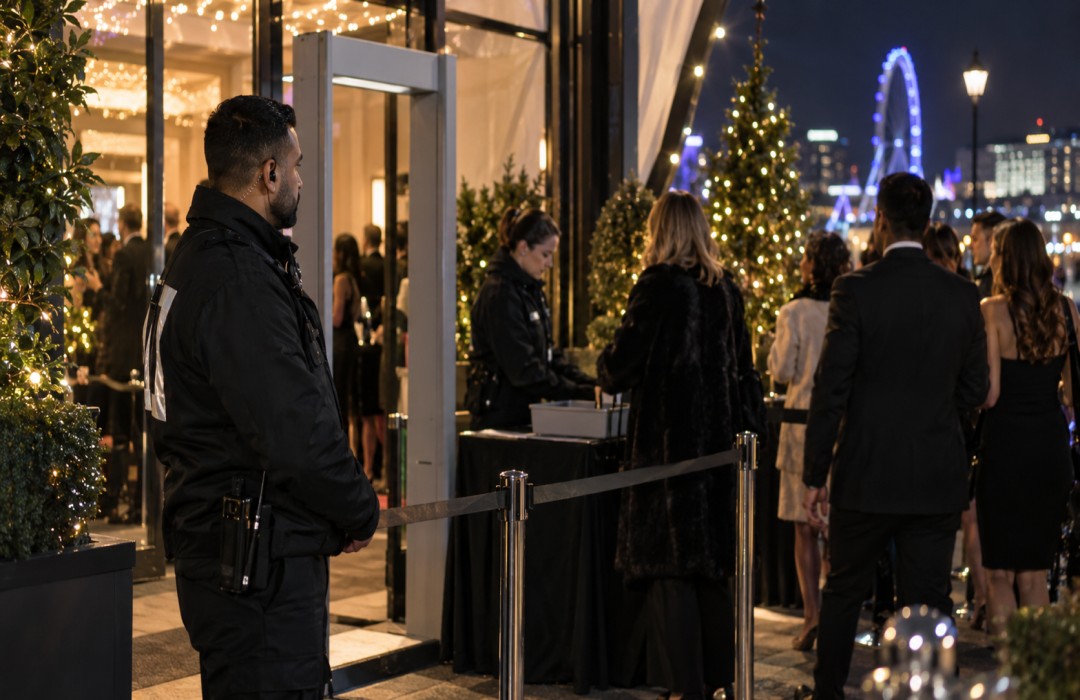
Professional staff must control access points during peak arrival times (typically 8-11 PM for New Year’s Eve). Check ID, monitor guest list accuracy, and prevent overcrowding. Plan for simultaneous mass arrival and ensure security personnel can manage queuing without creating bottlenecks.
Exit Management and Emergency Egress
When crowds leave after midnight, particularly in adverse weather, controlled egress prevents crushing and dangerous crowd surges. Maintain clear emergency exits at all times never allow guests to block these routes. Brief security staff on emergency exit locations and procedures.
Alcohol Service Management
Collaborate with bar staff to implement responsible alcohol policies. Security should identify warning signs of excessive intoxication early, employ de-escalation techniques, and support refusals of service. Train staff on the progression from jovial celebration to concerning intoxication.
Midnight Crowd Management
Security teams must position themselves strategically 15 minutes before midnight. Maintain real-time awareness of crowd density, position staff at potential bottleneck areas, and communicate constantly via radios. Monitor for surging or crushing behaviour and be prepared to implement crowd control measures.
First Aid and Medical Response
Ensure qualified first aiders are present and clearly identified. Position medical staff with clear sightlines and easy access. Coordinate with local ambulance services and ensure they know your venue location and access routes.
Regulatory Compliance: Legal Obligations You Cannot Ignore
Running an event isn’t just about guest enjoyment you have significant legal obligations under UK law.
Key Legislation:
Health and Safety at Work Act 1974: Requires you to ensure the health and safety of attendees, staff, and others affected by your event.
Licensing Act 2003: Governs alcohol service and licensing requirements for events.
The Regulatory Reform (Fire Safety) Order 2005: Requires fire risk assessment, emergency procedures, and escape route maintenance.
Counter-Terrorism and Security Act 2015: Imposes obligations to consider and mitigate terrorism risks.
Martyn’s Law (Protect Duty): Emerging legislation requiring formal documentation of safety measures, staff training records, and emergency preparedness plans.
Document Everything
Maintain written records of: risk assessments, security planning decisions, staff training completed, incident reports (if any), and communications with emergency services. This documentation demonstrates compliance and creates liability protection if incidents occur.
Choosing Your Security Provider: What to Look For
Not all security companies are created equal. Selecting the right provider is critical for event success.
Essential Criteria:
SIA Licensing: All staff must hold current SIA licences (Security Industry Authority). Verify this independently never accept provider assurances without checking the official SIA register.
Event Experience: Ensure they have extensive experience with events similar to yours. Ask for references from other organisers. Specifically request staff experienced with New Year’s Eve events.
Crowd Management Training: Ask what crowd management and de-escalation training their staff receive. Professional providers invest significantly in staff development.
Insurance and Liability: Confirm they carry appropriate public liability insurance (minimum £6 million recommended).
Communication Systems: Do they provide radios for team coordination? Can they implement real time communication with your event management team?
Early Booking: Book well in advance. Quality security providers are particularly busy during peak season (October-December). Last minute bookings may force compromises on staff quality.
Important Caveat:
Cost should never be the primary driver of your security decisions. Cutting corners on security to reduce costs is a false economy. An incident caused by inadequate security creates far greater financial exposure through liability, legal costs, and reputational damage than the difference between budget and premium security providers.
Frequently Asked Questions
Q1: Do we legally need security guards for our New Year’s Eve event?
No specific law mandates security, but your duty of care under Health and Safety legislation requires you to manage foreseeable risks. New Year’s Eve’s high risk profile makes security a practical necessity, not optional.
Q2: Can we use untrained staff as security?
Technically yes, but this is extremely risky. Untrained staff cannot effectively manage crowds, de-escalate conflict, or respond to emergencies. Professional security licensing (SIA) ensures minimum training standards and legal accountability.
Q3: How far in advance should we book security for New Year’s Eve?
Ideally 3-4 months before your event. Quality security providers book solid months in advance during peak season. Last minute bookings (within 4 weeks) may be possible but typically cost premium rates and may limit staff options.
Q4: What’s the difference between security guards and door supervisors?
Door supervisors require specific SIA licensing and focus on entry/exit control and conflict management. Security guards may have broader responsibilities. For events with alcohol, SIA-licensed door supervisors are critical.
Q5: Should we hire security from a company or independent contractors?
Companies provide accountability, insurance coverage, and backup staffing if someone becomes unavailable. Independent contractors offer flexibility but create single point of failure risks. For events as high-risk as New Year’s Eve, established companies are preferable.
Q6: Can security staff also perform other duties (coat checking, bar support)?
Not during peak hours. Security personnel need full attention on their security responsibilities, particularly during entry, midnight countdown, and exit periods. Multitasking compromises safety monitoring.
Q7: What should we do if a security-related incident occurs?
Immediately document the incident in writing (date, time, people involved, what happened, witnesses, response taken). Contact emergency services if anyone is injured. Notify your insurance provider. Preserve evidence and obtain witness statements. Consult with legal counsel if serious.
Conclusion: Professional Security Ensures Unforgettable New Year’s Eve Celebrations
New Year’s Eve is special. Guests look forward to celebrating with friends and family, toasting the past year and welcoming the new one. Your responsibility as an event organiser is ensuring this celebration is both joyous and safe.
The combination of late hours, alcohol service, high crowds, and peak energy at midnight creates a unique risk environment. Professional security planning risk assessment, appropriate staffing ratios, experienced providers, and regulatory compliance mitigates these risks substantially.
Investing in proper security isn’t just about risk management. Guests who know security is properly in place actually enjoy events more the peace of mind allows them to focus on celebration rather than worry.
Whether you’re planning a 50-person private party or a 5,000-person public celebration, the principles remain constant: assess your specific risks, staff appropriately with trained professionals, maintain clear communication systems, ensure regulatory compliance, and partner with experienced security providers who understand the unique challenges of New Year’s Eve.
Secure Your New Year’s Eve Event Today
Planning a New Year’s Eve event and need professional security? GSS Securities specialises in high-risk event security, including New Year’s Eve celebrations across the UK. Our SIA-licensed team has extensive experience managing crowd density, alcohol-related risks, and the unique challenges of midnight countdown celebrations.
Contact us for a free security assessment and quotation. We’ll evaluate your specific event requirements, recommend appropriate staffing levels, and provide transparent pricing. With months of experience securing New Year’s Eve events across the country, we understand what truly safe celebration looks like.