
Ask five different research firms how big the UK security market is, and you’ll get five different answers, and every single one could be defensible. One counts guards and patrols. Another folds in cameras, alarms and cyber defences. One measures in pounds, another in dollars. None of them are wrong. They’re just measuring different things.
That’s not just a technicality if you’re the one signing off the security budget in 2026. Whether you manage a warehouse, run a retail chain, organise events or oversee a hospital estate, you’re almost certainly spending more on security this year than last, and you’re probably wondering whether that’s a temporary blip or the new normal.
This report cuts through the confusion. Rather than another list of headline numbers, we’ve broken the UK security market down sector by sector, looked at what’s genuinely pushing demand higher (and, in one telling case, what’s keeping headline revenue flat), and pulled together practical guidance for anyone budgeting for security this year.
Let’s start with the question everyone asks first: how big is this market, really?
How Big Is the UK Security Market, Really?
Here’s the honest answer: it depends on what you count.
Look purely at core private security services, meaning manned guarding, patrols, door supervision, keyholding and similar contracted labour, and independent industry analyst IBISWorld puts the UK market at roughly £8.9 billion in 2026. That’s a touch lower than the £9.3 billion recorded in 2024: a gentle decline in nominal revenue even as the public conversation around security has only got louder.
Widen the lens to include electronic security, fire and safety, and the broader security products and services sector, and the figure climbs sharply. Industry estimates put the full UK security workforce market at up to £22.5 billion, while separate research covering security systems and technology specifically values the UK market at around $7.9 billion in 2025, projected to pass $12 billion by 2033.
Table 1. The UK Security Market at a Glance (2026)
| Measure | Figure | Scope / Source |
|---|---|---|
| Core private security services (guarding, patrols, keyholding etc.) | £8.9 billion (2026) | IBISWorld, guarding and patrol services only |
| Registered UK security businesses | 6,528 | IBISWorld |
| Wider security workforce industry (incl. electronic security, fire & safety) | Up to £22.5 billion | Industry estimates |
| UK security systems & technology market | ≈$7.9bn (2025), forecast to exceed $12bn by 2033 | Global market research, ≈5.5% CAGR |
| Active SIA licensed professionals | 450,000+ | Security Industry Authority |
| UK share of the global security market | ≈5% | Global market research |
None of these figures contradict each other. They’re answering different questions. When you’re comparing quotes or reading industry coverage, it’s worth asking which UK security market someone is talking about before you compare it to anything else.
Here’s the part that doesn’t get said enough, though: revenue and demand are not the same thing.
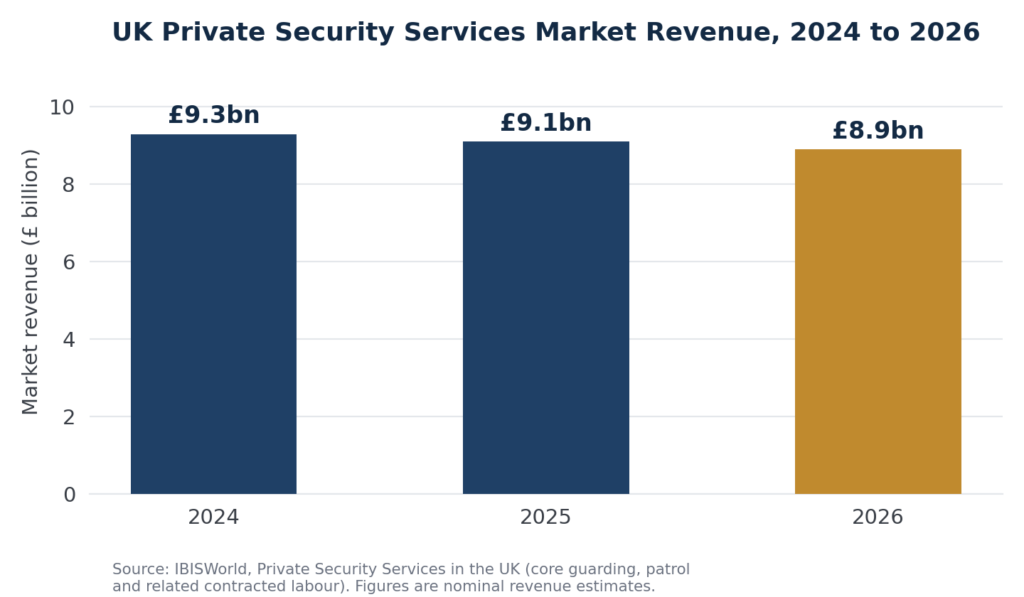
Figure 1. Core guarding and patrol revenue has softened slightly in nominal terms since 2024.
While core market revenue has softened slightly over the past three years, the number of people licensed to work in UK security has very nearly doubled since 2008, from 234,950 licence holders then to more than 450,000 today.
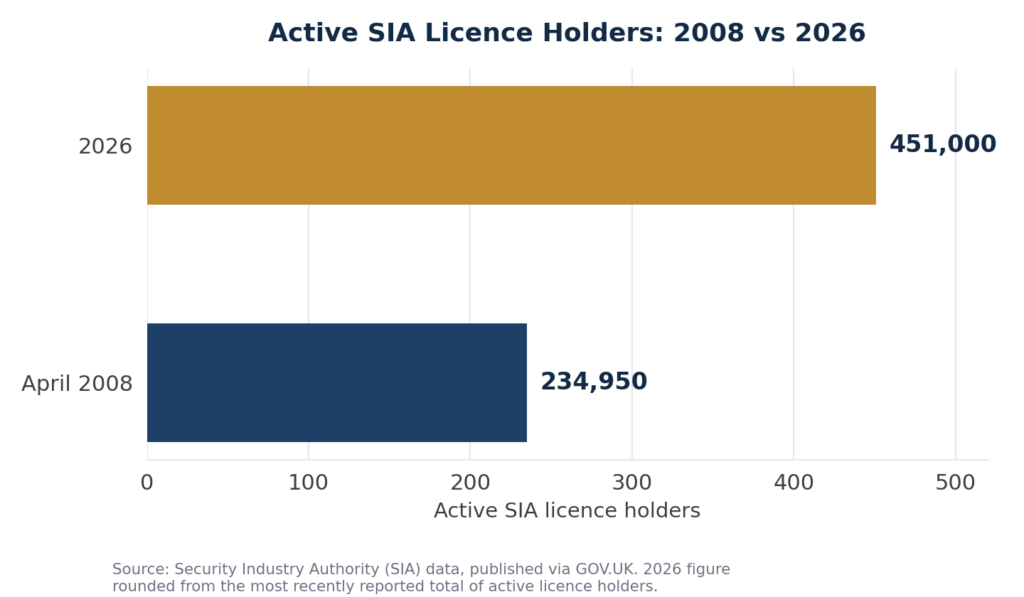
Figure 2. The licensed workforce has grown far faster than core market revenue.
That gap between flat revenue and a fast-growing workforce isn’t a contradiction. It’s a clue. Delivering roughly the same pound value of contracts now takes more people, largely because guarding is a wage-driven business and wages have risen fast (more on that later). It also confirms that demand, measured in bodies on the ground, hours covered and sites protected, is climbing steadily even where headline revenue isn’t.
Where UK Security Market Demand Is Actually Coming From
Numbers only tell you so much. What’s driving them is more useful, and different sectors are pulling in the same overall direction for very different reasons.
Retail: More Guards, Even More Incidents
Retail is the sector most people think of first, and for good reason. Shoplifting offences and violence against shop staff have both climbed to levels not seen in over two decades, pushing retailers who never used to budget for a guard to bring one in for peak trading hours. We’ve covered the full retail crime figures in detail elsewhere, so we won’t repeat them here. The short version: a visible, trained presence is now treated as a cost of doing business on a lot of high streets, not an optional extra.
Logistics and Warehousing: Built Fast, Guarded Late
This is the sector getting the least attention, and arguably deserving the most. The UK’s warehouse footprint has grown by around 61% since 2015, driven by the relentless rise of online shopping. In the first half of 2026 alone, take-up of large logistics space topped 15.9 million square feet, with retailers, logistics operators and international e-commerce and fulfilment businesses accounting for more than 80% of it.
Here’s the security problem hiding inside that growth story. Big-box warehouses tend to sit on the edge of towns, next to motorways, often with limited passing footfall and long stretches out of hours when nobody’s around. They hold concentrated, high-value stock: exactly the profile organised thieves look for. As e-commerce operators race to secure space in the Midlands “Golden Triangle” and beyond, mobile patrols, keyholding and alarm response are increasingly built into the security plan from day one, rather than added after the first break-in.
For example, a regional fulfilment centre that only staffs a day shift is, in practice, unguarded for roughly two-thirds of every 24 hours. A scheduled mobile patrol with alarm response closes that gap without the cost of round-the-clock static guarding, which is exactly why patrol contracts are growing faster in this sector than almost anywhere else.
Construction and Vacant Property: Still a Billion-Pound Problem
Construction sites and empty buildings remain prime targets. Industry estimates put the annual cost of UK construction site theft north of £1 billion, and vacant units between tenants are a well-known draw for squatters, metal thieves and vandals. It’s a big enough topic that we’ve given it its own dedicated coverage; the short version is that it’s pushing more site managers towards combined manned guarding, mobile patrols and, on higher-risk sites, K9 support, rather than relying on fencing and padlocks alone.
Events, Hospitality and the Night-Time Economy
Anywhere with a crowd needs crowd management, and 2026 has added a new layer of urgency in the shape of Martyn’s Law. We’ll come back to the detail shortly. The short version is that venues and organisers who once treated door supervision as a licensing formality are now building proper security and evacuation planning into how they operate, well ahead of enforcement.
Offices and the Public Sector: Fewer Days, Same Risk
Hybrid working hasn’t reduced the need for security so much as changed its shape. An office that once needed identical cover five days a week might now be busy on Tuesday to Thursday and quiet either side of it, which changes reception cover, access control and out-of-hours planning rather than removing the need for any of it. Many corporate and public sector clients now want guarding, access control and CCTV working together as one plan rather than three separate contracts.
Healthcare and Education: Duty of Care in Practice
Hospitals, clinics and schools carry a different risk profile again: vulnerable service users, safeguarding obligations, and a genuine need for calm, de-escalation-trained staff rather than a purely deterrent presence. Demand here is less headline-grabbing than retail crime, but it’s steady and growing, as NHS trusts and multi-academy trusts formalise site security policy rather than leaving it to individual buildings to work out for themselves.
Table 2. Where UK Security Market Demand Is Concentrated
| Sector | Main driver | Typical services in demand |
|---|---|---|
| Retail | Record shoplifting and staff violence | Retail security officers, door supervision |
| Logistics & warehousing | E-commerce-driven warehouse growth | Mobile patrols, keyholding, alarm response |
| Construction & vacant property | Organised theft, squatting, vandalism | Manned guarding, mobile patrols, K9 units |
| Events & hospitality | Martyn’s Law, licensing conditions | Event security, door supervision |
| Offices & public sector | Hybrid working, integrated risk | Manned guarding, CCTV, access control |
| Healthcare & education | Safeguarding, duty of care | Manned guarding, trained front-of-house staff |
Martyn’s Law: The Regulation Everyone’s Watching
Few pieces of legislation have shaped 2026 security budgets quite like the Terrorism (Protection of Premises) Act 2025, better known as Martyn’s Law. It received Royal Assent on 3 April 2025, and while full enforcement isn’t expected until spring 2027, the run-up has been anything but quiet.
Table 3. Martyn’s Law: Key Dates to Know
| Date | Milestone |
|---|---|
| 3 April 2025 | Royal Assent granted to the Terrorism (Protection of Premises) Act 2025 |
| 15 April 2026 | Home Office publishes Section 27 statutory guidance |
| 12 June 2026 | SIA’s Section 12 enforcement consultation closes |
| From June 2026 | Core provisions begin phasing in under commencement regulations |
| Autumn 2026 | Final SIA regulatory guidance expected |
| Spring 2027 | Full enforcement and duties expected to take effect |
The Home Office published its Section 27 statutory guidance on 15 April 2026, setting out in practical terms what qualifying premises must do. The Security Industry Authority, appointed as regulator, ran a consultation on its own enforcement approach that closed on 12 June 2026, and under the 2026 commencement regulations, core provisions began phasing in from that same month. Final SIA guidance is expected in autumn 2026, ahead of the law taking full effect the following spring.
For venues expecting 200 to 799 people at once, that means a “standard” duty covering evacuation, lockdown and communication planning. Venues or events expecting 800 or more face an “enhanced” duty that also covers monitoring, movement control and physical security measures. Waiting for enforcement before acting is a risky strategy: forward-thinking hotels, schools, retailers and event organisers are commissioning risk assessments now, so they’re compliant on day one rather than scrambling in 2027.
The Squeeze Behind the Numbers: Wages, Workforce and Margins
Remember that gap between flat market revenue and a workforce that’s nearly doubled since 2008? Wages explain a good part of it. The National Living Wage rose to £12.71 an hour from April 2026, a 4.1% increase and the largest uplift of its kind in the scheme’s history. For a labour-intensive industry like guarding, that lands directly on the cost base.
At the same time, fewer people are entering the profession even as demand grows. Rising wage costs and a tightening supply of new recruits are exactly why more businesses are choosing to outsource security to established providers with their own recruitment pipelines and training programmes, rather than trying to build and retain an in-house team in a shrinking labour pool.
What This Report Means for Your Business
If you take one thing from this report, make it this: demand across the UK security market isn’t evenly spread, and treating your security budget as a single line item is a mistake. A few practical steps worth taking this year:
- Benchmark against your sector, not the market average. A logistics site and a high street shop carry completely different risk profiles and should be budgeted differently.
- Check whether Martyn’s Law applies to you now. If your premises or events regularly hold 200 or more people, get a risk assessment done well before 2027, not after.
- Ask for a risk assessment, not a quote. A provider who prices your site without visiting it is guessing, not assessing.
- Build in wage inflation. With the National Living Wage rising again in 2026, expect contract renewals to reflect higher costs, and budget for it rather than being caught out.
- Review out-of-hours cover separately from daytime cover. Several of the sectors driving demand this year, warehousing especially, are exposed precisely when nobody’s looking.
- Choose accredited providers. SIA Approved Contractor Scheme status, ISO 9001 and sector accreditations such as Constructionline or CHAS are a reasonable proxy for consistent quality, particularly if you need to demonstrate due diligence to your own insurer or clients.
Frequently Asked Questions About the UK Security Market
How big is the UK security market in 2026?
It depends on scope. Core private security services (guarding and patrols) are valued at around £8.9 billion by IBISWorld, while the wider security workforce industry, including electronic security and fire safety, is estimated at up to £22.5 billion.
Why is demand rising even though market revenue looks flat?
Because revenue and demand aren’t the same measure. The number of licensed security professionals has nearly doubled since 2008, wage costs have risen sharply, and specific areas such as logistics and events security are growing quickly even while overall nominal revenue has softened slightly.
Which sectors are driving UK security market demand the most?
Retail, logistics and warehousing, construction and vacant property, and events and hospitality are reporting the strongest growth in security spend, with healthcare and education close behind as formal site security policies become more common.
What is Martyn’s Law and when does it take effect?
Martyn’s Law, formally the Terrorism (Protection of Premises) Act 2025, received Royal Assent in April 2025. Core provisions are being phased in through 2026, with full enforcement expected from spring 2027. It requires premises and events expecting 200 or more people to have proper security and emergency procedures in place.
Is the UK security market growing or shrinking?
Both, depending on how you measure it. Core guarding revenue has eased slightly in nominal terms over the past three years, but the workforce, specific service lines such as event security and mobile patrols, and the wider technology-inclusive market are all forecast to keep growing.
How can my business prepare for rising security costs?
Start with a proper site risk assessment rather than a flat quote, check whether Martyn’s Law applies to your premises, and choose an accredited provider that can show SIA Approved Contractor Scheme status alongside relevant sector certifications.
Final Words
The UK security market in 2026 doesn’t move in one direction for one reason. Retail crime, a booming warehouse sector, new counter-terrorism law, hybrid working patterns and a tightening labour market are all pulling the same way overall, upward, but for genuinely different reasons depending on which sector you sit in.
That’s precisely why a one-size-fits-all approach to buying security rarely works. What a warehouse on the edge of a motorway network needs is not what a boutique hotel in central London needs, even if both are technically shopping in the same market.
At GSS Security Services, that’s the conversation we have with every client before we quote a single number: what’s actually driving your risk, and what that means for the service you need. If you’d like a straight read on where your business sits against the trends in this report, get in touch, and we’ll start with a proper site assessment, not a guess.