
Christmas parties are supposed to be the highlight of the year. Good food, a few drinks, colleagues or friends relaxing together. Yet the same mix that makes a party fun, a crowd, alcohol and a night that runs late, is exactly what creates trouble. Most nights pass without incident. The ones that go wrong tend to involve a guest who has had far too much, someone who has been spiked, or an entrance that let in people nobody had checked.
This article is for venue operators and employers who are planning a festive event. It covers what event security should look like in practice: how to respond to drink spiking, how to set a door policy that people can follow, how to manage drunk guests without breaking the law, and what your duty of care looks like when the party is hosted by your business. We also cover the Martyn’s Law position, sample staffing costs and a practical checklist. Where a point comes from an official source, we link to it.
Disclosure: GSS Securities provides event security, door supervision manned guarding, and other security services in the UK. We are not legal advisers, and this article does not replace advice from your licensing solicitor or local council. It is designed to help you plan well and ask the right questions.
Why Christmas Parties Need a Proper Event Security Plan
A festive night combines several risk factors at once. Crowds are larger than usual, guests are often less familiar with each other, alcohol is flowing for longer, and in many cases people arrive with guests who were not on the original list. Each factor is manageable on its own. Together, they can overwhelm an untrained team in a single evening.
The Risk Mix: Crowds, Alcohol and Strangers
Think about the specific risks for your event. A works party in a restaurant has different pressures from a public party in a town-centre bar. Ask yourself who will be attending, how many people you expect at the busiest moment, whether any guests are under 18, when alcohol service stops, how people will get home and what happens if someone becomes unwell or aggressive. Writing those answers down is the first step of any plan.
Understanding Drink Spiking
Drink spiking means someone adding alcohol or another substance to a person’s drink without their knowledge or consent. It is a serious crime, and it is a concern for any venue or employer that serves drinks. The Home Office’s guidance for venues and festival organisers sets out practical steps, which we summarise below. Read the full guidance on GOV.UK before you finalise your plan.
Warning Signs Staff Should Watch For
Staff should be alert to behaviour that is out of character for the guest, such as sudden confusion, unsteadiness, unusual drowsiness, or a person who seems far more affected than their drinks would suggest. Staff should also be alert to someone who appears to be looking after a friend who cannot stand or speak clearly, or who appears to be taking control of another person’s drinks.
Practical Prevention Measures
The guidance recommends several steps that are simple and affordable. Remove unattended glasses from tables, and do not promote rapid drink consumption. Consider anti-spiking bottle stoppers and drink covers, and make sure bar staff are alert to unusual requests. Clear signage saying that spiking will not be tolerated and will be reported to the police also helps, because it changes the atmosphere before anything happens.
What to Do When a Spiking Is Reported
The guidance is clear that every reported incident must be acted on. Call the police if they have not already been contacted. Check whether the person needs medical help and arrange it. Find their friends and a quiet space away from the crowd, and help them get home safely. Avoid judgement, because a victim should never be blamed. Secure the drink and any container as evidence, and keep CCTV footage. Where possible, identify the person responsible and tell security staff, who may still be on site. Speak to your local police before the event about the best approach.
Funding is also available. The Home Office guidance notes up to £250,000 for night-time economy staff training, and door supervisors holding an SIA licence are expected to need mandatory spiking training. Check the current position on GOV.UK before relying on a specific date.
Door Policy: Setting Clear Rules Before the First Guest Arrives
A good door policy is written down, shared with everyone who works the entrance, and applied consistently. A policy that changes depending on who is on duty is a policy nobody trusts. Your door policy should cover four things: who is allowed in, how entry is checked, what happens to guests who are refused, and how the entrance is staffed at peak times.
Guest Lists, ID Checks and Age Verification
If you operate a guest list, make sure it is accurate before the event and that door staff have it on the night. Use a clear age verification policy and train door staff to recognise valid forms of ID. Keep a log of guests who are refused entry, because that record helps if a complaint or an incident follows. Plus-ones and uninvited guests are a common source of problems, so state your rule on them in advance and communicate it to every guest.
Capacity and Queue Management
Know your capacity and count people in and out. Crowded entrances create tension, and a queue that stretches down the street invites trouble. If you expect a busy night, consider a staggered arrival time, a clear queue route and a second point of entry for staff and deliveries.
Refusing Entry and Removing Guests
Door supervisors need clear authority to refuse entry, for example to someone who is already visibly drunk or who is known to have been removed from a previous event. Make sure the decision is recorded and that the guest is told calmly and politely why they are not being admitted. Explain how the decision was made without debating it at length, and call for backup if the situation becomes confrontational.
Managing Drunk Guests Without Breaking the Law
The legal position on drunk guests is more pointed than many venues expect. Under section 141 of the Licensing Act 2003, it is an offence to knowingly sell, or attempt to sell, alcohol to a person who is drunk, and it is also an offence to knowingly allow such a sale. According to a 2024 legal summary, a bar member of staff can face a £90 fixed penalty or a fine of up to £1,000, and the licence holder or designated premises supervisor can also be liable for each incident. Persistent breaches can lead to a licence review, and police sting operations are common around Christmas. Freeths sets out the position in more detail.
Recognising Intoxication
The law does not define drunkenness, which means staff need a practical standard. Examples include slurred speech, staggering, difficulty counting money and aggressive or unpredictable behaviour. Write a short guide for your bar team and make sure everyone uses the same test. Consistency protects both your staff and your licence.
Removing a Guest Safely
When you need to refuse service or remove a guest, do it early, calmly and as a team. Tell the guest about your intoxication policy, offer water or a taxi where appropriate, and avoid physical contact unless it is necessary. If there is a risk of violence or the guest is not safe to leave alone, call the police or an ambulance. Never leave a vulnerable person alone on the street without checking how they will get home.
Your Duty of Care as an Employer
Employers who host a Christmas party for staff have legal responsibilities too. Under the Health and Safety at Work etc. Act 1974, employers must ensure, so far as is reasonably practicable, the health, safety and welfare of their employees, and the duty extends to events held on the employer’s behalf. A legal summary from Freeths notes that employers also owe a duty of care under the law of negligence, and that where aggressive behaviour is common, it may be reasonable to engage door staff to protect staff and customers.
In practice, that means a written plan for the event, clear expectations for staff behaviour, a responsible person on duty who is not drinking heavily, safe transport home, and a clear route for reporting harassment or an incident. Do not assume that an event held outside the office is outside your responsibility.
Martyn’s Law and Christmas Events
The Terrorism (Protection of Premises) Act 2025, known as Martyn’s Law, applies according to how many people may be present at the same time. The Home Office statutory guidance sets out two tiers, and it treats events as qualifying when the expected numbers reach the thresholds. Staff count towards the total.
| Tier | People expected at the same time | What it means for a Christmas event |
|---|---|---|
| Standard | 200 to 799 | Public protection procedures for evacuation, invacuation, lockdown and communication, so far as reasonably practicable |
| Enhanced | 800 or more | All standard duties, plus a documented assessment of measures, and a Designated Senior Individual where the responsible person is an organisation |
Table 1. Thresholds and duties from the Home Office statutory guidance. Check the full text for your own position, and remember that the guidance counts staff.
Most office and restaurant parties will fall well below these numbers. A large festive party in a function hall or town-centre venue may not. Count everyone who is expected at the busiest point of the night, record how you reached the figure, and speak to your venue’s responsible person about the tier.
What Event Cover Costs: A Worked Example
Costs vary widely by area, date and risk level. As a benchmark, a published 2026 rate card from a London conference venue lists a security officer at £30 per hour on standard days, and £60 per hour on bank holidays, with an 8-hour minimum. Those figures come from a venue supplier rather than a security company, and VAT may apply. Use them as a reference point, not a quote.
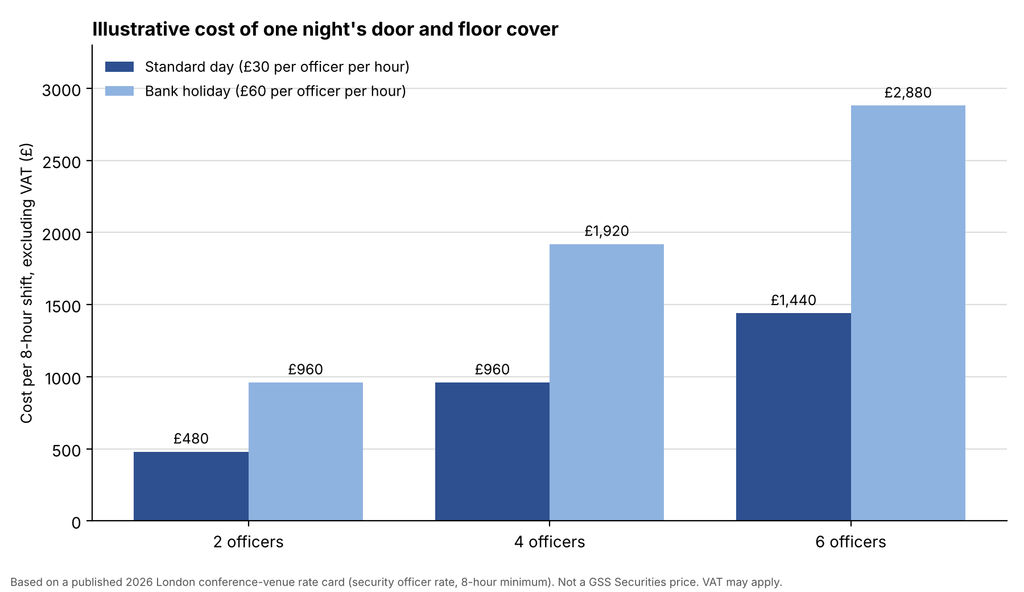
Figure 1. Our calculation from the rate card. Bank holiday rates apply to public holidays such as Christmas Day, Boxing Day and New Year’s Day.
| Cover level | Standard day (8 hours) | Bank holiday (8 hours) |
|---|---|---|
| Two officers | £480 | £960 |
| Four officers | £960 | £1,920 |
| Six officers | £1,440 | £2,880 |
Table 2. Illustrative calculation, excluding VAT, from the rate card in Figure 1. The 8-hour minimum applies to every booking.
The lesson is that a bank holiday shift doubles the cost, and a larger team multiplies every figure. Before you book, decide how many officers you truly need. Two door staff and a floor supervisor may cover a 60-guest restaurant party, while a 300-guest event with a busy entrance needs a more detailed plan.
Practical Tips for a Better Christmas Event Security
1. Write a one-page event plan. Cover capacity, timings, alcohol service, the door policy, the names of the responsible persons and the emergency contacts.
2. Brief every member of staff. Bar, door and floor staff should know the policy on spiking, intoxication and refusals before the first guest arrives.
3. Agree the door rules in advance. Share the guest list, the ID policy and the plus-one rule with everyone who will work the entrance.
4. Check your CCTV. Make sure cameras cover the entrance, bar and exits, and that footage can be retrieved quickly if needed.
5. Plan the end of the night. Arrange taxis, safe routes and a meeting point for anyone who needs help, and make sure someone stays until the venue is clear.
6. Keep a log. Record refusals, ejections, incidents and any reports of spiking. Records protect your team if questions arise later.
7. Talk to the police and the council early. Your licensing team can advise on the conditions attached to your licence, and local police may offer useful advice.
8. Review the night afterwards. Note what worked, what did not and what you would change next year.
How GSS Securities Supports Christmas Events
Our event security service covers the planning and staffing of festive functions, with officers briefed on your door policy and your plan. Where you need dedicated entrance control, our door supervision team can manage the door and refusals. For a longer event or a venue with several areas, manned guarding can provide cover across the premises, and corporate security can support employers with wider duty of care planning. Speak to our team about the size, timing and risk of your event, and we will explain what cover would make sense.
Frequently Asked Questions
Here are answers to the questions we hear most often.
What should a venue do if someone reports being spiked?
Call the police if they have not already been contacted, check whether the person needs medical help, and keep them with a trusted friend in a quiet space. Secure the drink as evidence, keep CCTV footage and tell security staff. The Home Office guidance sets out the full steps.
Can a bar serve a guest who is drunk?
No. Under section 141 of the Licensing Act 2003, it is an offence to knowingly sell alcohol to someone who is drunk, and it is an offence to knowingly allow such a sale. Train staff to recognise intoxication and follow a consistent policy.
Do door supervisors need a licence?
Yes. Door supervisors carrying out licensable work need an SIA door supervisor licence. Check that each member of your door team holds a valid licence before the event, and ask your security provider for evidence of it.
Is an office Christmas party the employer’s responsibility?
Yes, in practice. Employers owe duties under the Health and Safety at Work etc. Act 1974 to their employees, and those duties can extend to events held on the employer’s behalf, including the way alcohol is managed and how people get home.
When does Martyn’s Law apply to a party?
It applies when the number of people expected at the same time reaches 200, counting staff. Most office parties will be well below that. Large public events may fall into the standard tier, and 800 or more people would bring the enhanced tier into play.
Is it worth paying for door staff at a small party?
It depends on the risk. A small private party with a known guest list may not need dedicated door staff, but a party open to the public, with alcohol and a history of problems, usually does. Consider the size of the crowd, the alcohol policy and the likelihood of trouble before deciding.
Final Words
A successful Christmas event is one where people leave safe, happy and ready to come back next year. Good event security makes that possible. Prepare a clear plan, brief your team, set a door policy that everyone follows, handle drunk guests lawfully and treat every spiking report as a priority. The cost of planning is almost always lower than the cost of an incident.
If you are planning a festive event and want to talk through your options, contact GSS Securities for a discussion about your venue, guest numbers and risk.