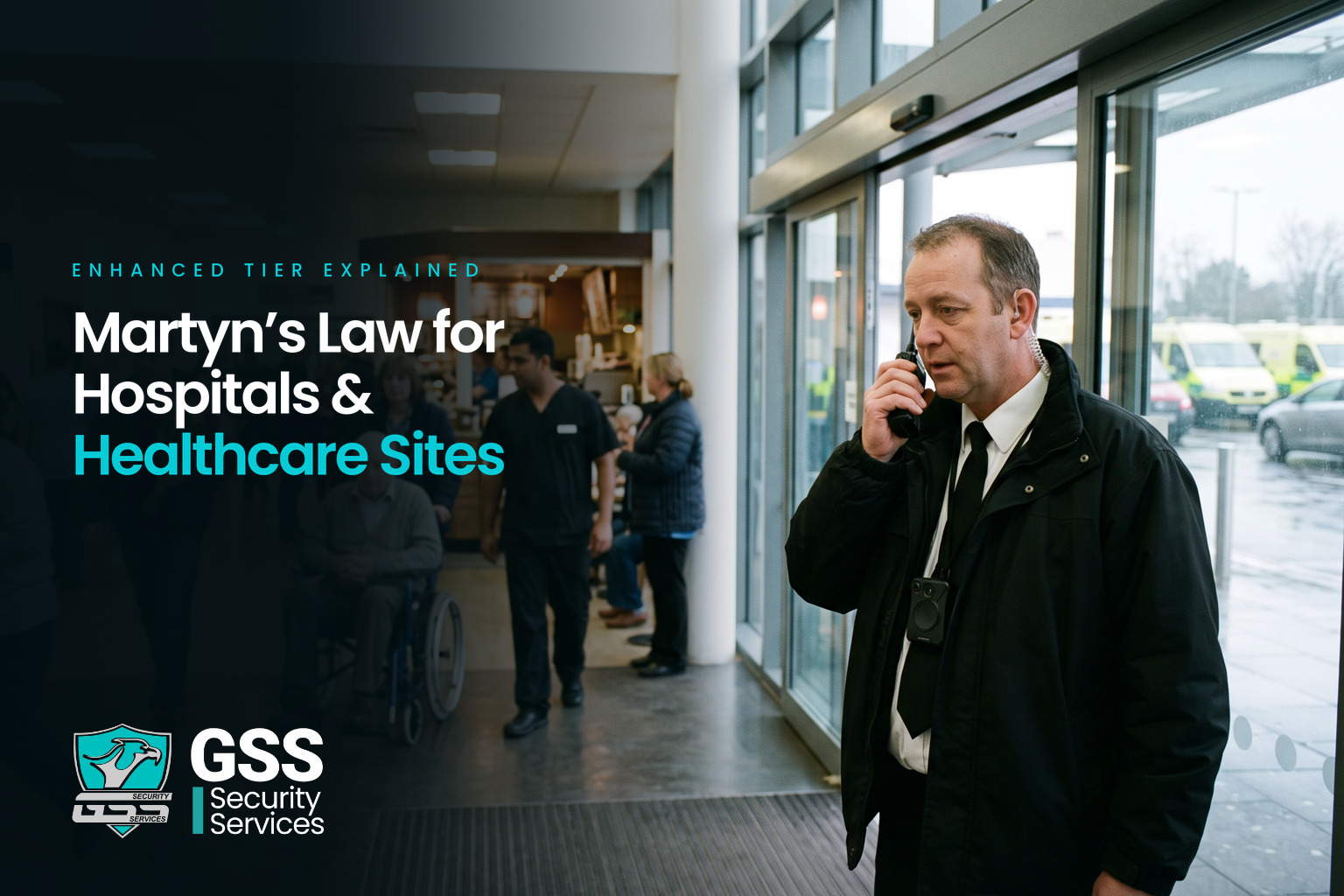
When people think about Martyn’s Law, they often picture festivals, stadiums or large shopping centres. Hospitals and healthcare sites rarely come to mind first, yet they are some of the busiest buildings in the country. A large acute hospital can have thousands of people inside on a weekday afternoon, between patients, visitors, clinical staff, contractors and volunteers. That matters, because the Terrorism (Protection of Premises) Act 2025, known as Martyn’s Law, sorts premises into tiers according to how many people may be present at the same time.
This article explains how the two tiers work, why many hospitals and larger healthcare sites are likely to land in the enhanced tier, and what that means in practice. We also cover timing, the regulator’s role and the practical steps that NHS trusts and private healthcare providers can take now. Where a figure or rule comes from an official source we link to it, and where we are describing an illustrative example we say so.
Disclosure: GSS Securities provides security services in the UK, including manned guarding and corporate security. We are not a legal adviser, and this guide does not replace advice from your own counsel or your sector regulator. It is designed to help you understand the framework and ask better questions.
What Martyn’s Law Is and Why Healthcare Should Pay Attention
Martyn’s Law takes its name from Martyn Hett, one of the 22 people killed in the terrorist attack at Manchester Arena in 2017. The Act, which received Royal Assent on 3 April 2025, places duties on the people responsible for certain qualifying premises and events to think about public protection from terrorism. It does not require every site to become a fortress. It requires a proportionate, documented approach that is appropriate to the size and nature of the site.
Healthcare is one of the uses covered. The Security Industry Authority, which regulates the Act, expects responsible persons to work out their tier using a reasoned and evidenced method. For hospitals, that calculation is where most of the surprises happen.
The Two Tiers Explained
The Act sets two capacity-based tiers. The statutory guidance, published by the Home Office, is clear that the count must include staff working at the premises. The table below summarises the thresholds and the core duties, drawing on the Home Office statutory guidance and the NHS England bulletin on healthcare buildings.
| Tier | People expected at the same time | Core duties |
|---|---|---|
| Standard | 200 to 799 | Notify the SIA, and put in place public protection procedures covering evacuation, invacuation, lockdown and communication, so far as reasonably practicable |
| Enhanced | 800 or more | All standard duties, plus assess and review public protection measures, prepare a tailored document, appoint a Designated Senior Individual where the responsible person is an organisation, and cooperate with other responsible persons |
Table 1. Thresholds and duties summarised from the Home Office statutory guidance and NHS England’s 2025 bulletin. Check the full text of the Act and guidance for your own position.
Two details matter a great deal. First, the count is the number of people reasonably expected at the same time, from time to time, not the average on a quiet day. Second, the count covers only the part of the premises used for the qualifying activity, so a site with a mix of uses may need separate assessments.
Why Hospitals Are More Likely to Reach the Enhanced Tier
Most people think of a hospital as a building full of patients. In reality, the people present at the busiest moment include patients, visitors, outpatient attendees, clinical and support staff, contractors, pharmacy and café customers, and volunteers. Add them together and a mid-sized hospital can easily pass the 200 mark, while a large acute site may pass 800 at certain times of day.
Counting People at the Busiest Moment
The NHS England bulletin advises assessing each site’s peak occupancy, including staff, patients and visitors, and then determining the applicable tier. The guidance expects a reasonable, evidenced method. That could mean using appointment data, bed occupancy, visiting hours, shift patterns and footfall counts. It is a sensible step to record how you reached the figure, because the regulator can ask to see it.
Groups of Buildings and Campuses
Hospital campuses are often made up of many buildings. Where buildings are close together and under the same control, they may be treated as one premises for the purposes of the Act. Distinct areas, such as a café, a pharmacy or a separate clinic building, may need to be assessed separately and could fall into different tiers. Getting that boundary right is one of the first decisions a trust needs to make.
Worked Examples
The examples below are illustrative. They are not real sites and the peak figures are invented to show how the thresholds work. Use them to think about your own estate, then replace the numbers with an evidenced count.
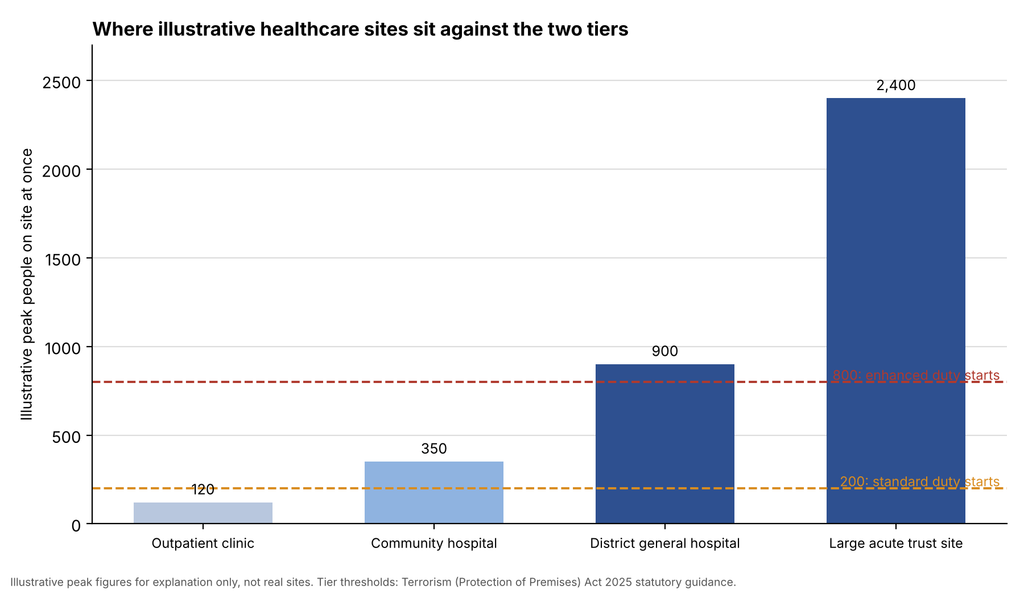
Figure 1. Illustrative peak figures for explanation only. Thresholds from the Home Office statutory guidance.
| Illustrative site | Assumed peak people at once | Likely tier | Why it matters |
|---|---|---|---|
| Outpatient clinic | 120 | Below the Act’s threshold | Confirm that peak counts stay under 200, including staff |
| Community hospital | 350 | Standard | Procedures and communication must still be in place |
| District general hospital | 900 | Enhanced | A documented assessment and a Designated Senior Individual are needed |
| Large acute trust site | 2,400 | Enhanced | Campus boundaries and cooperation between responsible persons become central |
Table 2. Illustrative examples only. Each site needs its own evidenced count.
Consider the district general hospital in Table 2. Its peak of 900 may occur during evening visiting, when staff are changing shifts. If a trust only counts the daytime clinical workforce, it could underestimate the total and wrongly conclude that it is in the standard tier. A count taken at the busiest hour, using real data, is far more defensible.
What the Enhanced Tier Asks of a Trust or Provider
For an enhanced tier premises, the obligations go further than procedures on paper. According to the NHS England bulletin, the enhanced duty covers the following:
- Assess and review public protection measures. These should address monitoring, controlling movement, physical safety and security, and information security.
- Prepare a tailored document. It should show how the Act’s requirements are being met at that site, and be kept up to date.
- Appoint a Designated Senior Individual. Where the responsible person is an organisation, a senior person must oversee the work and make sure senior management takes part in decisions.
- Cooperate across shared responsibility. Where more than one body controls part of a site, the responsible persons must coordinate as far as reasonably practicable.
Each duty applies so far as is reasonably practicable, which means size, layout and available resources are taken into account. That flexibility is helpful, but it also means you need to record your reasoning clearly.
Timing: When the Duties Bite
Royal Assent came on 3 April 2025. The Act includes an implementation period of at least 24 months. According to the NHS England bulletin, full compliance assessments and enforcement begin in April 2027. The Home Office and the SIA are expected to publish further guidance during that period, so the detail may change. The time to start is now, because a proper assessment, a building-by-building tier decision and a documented plan take months to produce, not weeks.
Penalties and the Regulator’s Role
The SIA can issue compliance notices, restriction notices and monetary penalties for serious or persistent non-compliance. The NHS England bulletin states that the maximum penalty for enhanced tier premises is the higher of £18 million or 5% of revenue, with daily penalties possible for continuing breaches. Penalty levels for the standard tier were set out in the Bill, and we recommend checking the final Act and the SIA’s published approach before relying on any specific amount. The headline point is clear: this is a regulated duty with real financial consequences, and boards carry personal exposure under the Act’s criminal offences and their wider duties.
Practical Steps for Hospitals and Healthcare Sites
1. Map every building and area. Create a list of premises, record which are under common control, and note the Schedule 1 use each one supports.
2. Count peak occupancy properly. Use real data for the busiest hour on the busiest day, and include staff, patients, visitors and contractors. Keep the method on file.
3. Name the responsible person. For an NHS trust this is usually the trust itself, but confirm the position for leased and shared sites.
4. Identify a Designated Senior Individual early. The NHS England bulletin suggests the Accountable Emergency Officer as one option. Make sure the role is clear and resourced.
5. Test evacuation, invacuation, lockdown and communication. Procedures only work if staff, volunteers and contractors understand them and have practised them.
6. Train your people. The bulletin strongly encourages ACT e-learning from ProtectUK for staff and volunteers, alongside any site-specific training.
7. Review insurance and board responsibilities. Check your directors and officers cover and make sure the board understands its role.
8. Keep the document live. Review measures regularly and update the plan when your occupancy, layout or contractors change.
How GSS Securities Can Support Healthcare Sites
Legal duties under Martyn’s Law sit with the responsible person, and that will not change. However, many of the practical measures depend on trained people, clear procedures and a reliable presence on site. Our manned guarding services can provide trained officers to support access control, monitoring and incident response. Our corporate security services cover wider site protection for organisations with complex estates. Where monitoring technology is part of your plan, our security camera installation team can help with the hardware side. We would always recommend that your assessment and document are led by the responsible person, with any provider’s role set out clearly.
Frequently Asked Questions (FAQs)
Here are answers to the questions we hear most often.
Does Martyn’s Law apply to every hospital?
Not automatically in the same way for every site. The Act applies to qualifying premises where 200 or more people, including staff, may be present at the same time for a qualifying activity, and healthcare is one of those activities. Each site needs its own assessment.
Are all hospitals in the enhanced tier?
No. Smaller sites may fall in the standard tier, and some sites may be below the threshold altogether. Large acute sites with high peak numbers are more likely to reach the enhanced tier, so every building needs an evidenced count.
Who is the responsible person for an NHS hospital?
According to the NHS England bulletin, for a hospital it is usually the NHS Trust or NHS Foundation Trust operating it. Where another body operates the hospital, the governing body may be responsible. Landlords are not automatically the responsible person.
When do the duties start?
Royal Assent was on 3 April 2025 and the implementation period is at least 24 months. The NHS England bulletin states that full compliance assessments and enforcement begin in April 2027, so planning should start now.
Do volunteers and contractors count?
Volunteers and staff working at the premises are counted in the capacity figure. Contractors and visitors who are present at the same time may also be counted, so the count should reflect the real peak. Staff and volunteers also need training so procedures work in practice.
Can a security provider take on Martyn’s Law compliance for us?
A provider can support your plan with trained officers, procedures and monitoring, but the legal responsibility stays with the responsible person. Ask any provider to set out in writing what they will and will not do.
Final Words
For many people, a hospital is simply a place of care. Under Martyn’s Law, it is also a public building with a peak population that may run into the hundreds or thousands. The sensible response is to count honestly, decide the tier with evidence, and build a plan that people can actually use. The enhanced tier demands more paperwork and governance, but it also gives trusts a clear framework for protecting patients, visitors and staff.
If you would like to talk through how manned guarding or corporate security could support your plan, get in touch with the GSS Securities team. Start with your peak occupancy figures, because every other decision flows from them.