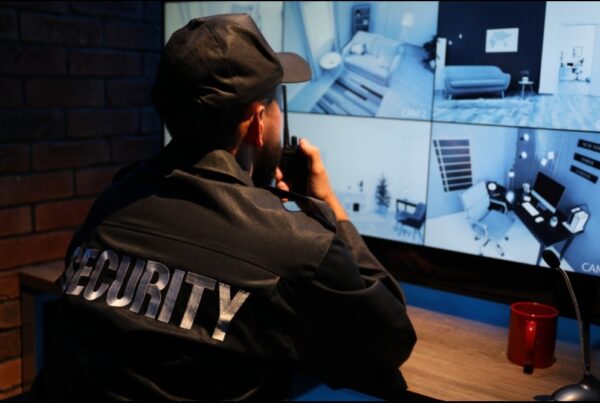
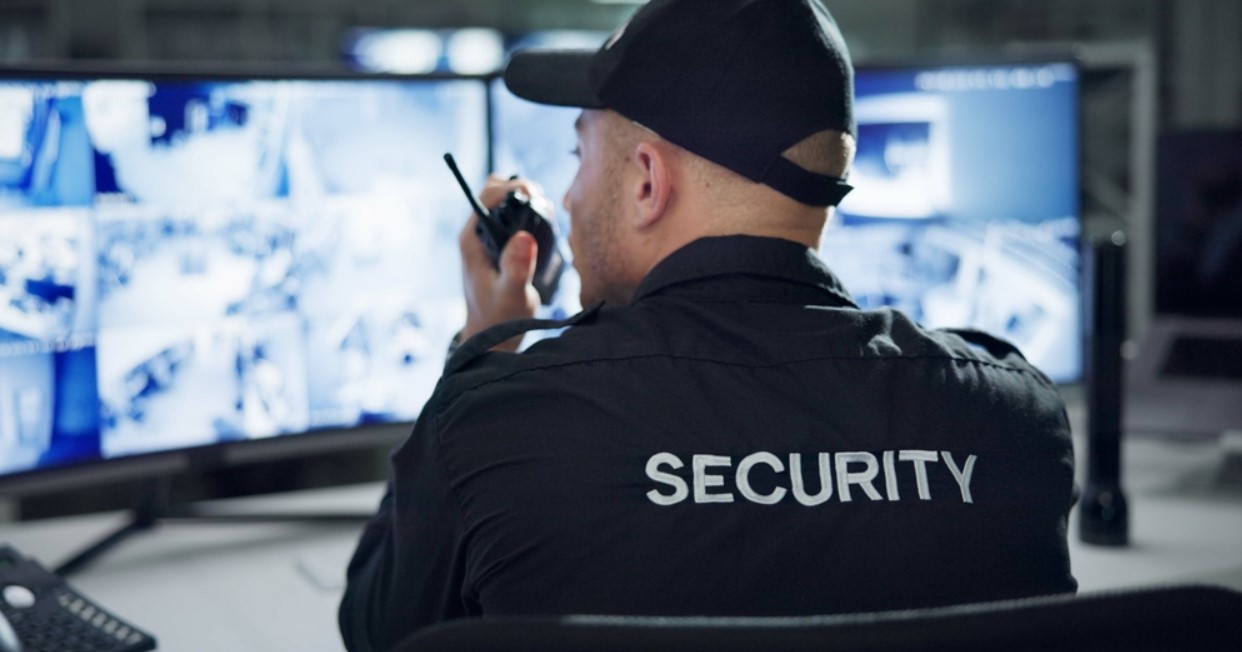
The image of a security guard sitting still in front of a bank of grainy black-and-white monitors is quickly becoming a thing of the past. Modern threats, from break-ins and theft to complex cyber-physical attacks, need a much more flexible response. Today, security for businesses isn’t just about putting a lock on the door or hiring people to walk around the outside. It’s all about being smart, working together, and moving quickly. Technology has completely caused this change. The combination of physical hardware and advanced software has changed corporate security services from things that need to be done after the fact to things that can be planned ahead of time. Companies can now build a safety system that predicts incidents before they happen instead of just recording them as they happen by combining CCTV, Artificial Intelligence (AI), and advanced access control.
Corporate Security Services and The Evolution of CCTV
For decades, closed-circuit television (CCTV) has been a mainstay of corporate security services. But legacy systems had a big problem: they depended completely on people paying attention. If an operator looked at the wrong screen at the wrong time, the incident was missed until it was looked at again.
Modern video surveillance is more than just recording. High-definition cameras are now smart sensors that can collect data that goes beyond just a visual feed.
Secure Your Business with Reliable Corporate Security Services
Video Analytics and Smart Surveillance
Modern CCTV systems have advanced video analytics built in. These systems can tell the difference between a stray animal, a falling branch, and a person who shouldn’t be there, which greatly lowers the number of false alarms that security teams often have to deal with.
These cameras can also tell what kinds of behaviours are happening. For instance, “loitering detection” can let security staff know if someone stays in a sensitive area for longer than a set amount of time. In the same way, “object removal” analytics can set off an alarm if a valuable item is moved from where it usually is. It makes the camera an active part of the security protocol instead of just watching.
Thermal and Low-Light Imaging
The edges of a business are often most vulnerable at night or when the weather is bad. Old-fashioned cameras don’t work well in these situations, but new technology has made things better. Instead of light, thermal imaging cameras pick up heat signatures. It means that even in complete darkness or thick fog, you can’t hide from them. For corporate security services managing large industrial sites or campuses, this capability is essential for maintaining a secure perimeter 24/7.
Access Control: The First Line of Defence
CCTV keeps an eye on the property, and access control decides who can use it. The days of simple keycards are coming to an end. These cards can be easily lost, stolen, or copied. The industry is moving towards access that is based on identity and doesn’t require any friction. It will make things safer and easier for users.
Biometric Integration
Biometrics are the most secure way to connect a person to their access credentials. Fingerprint scanners, facial recognition terminals, and iris scanners make sure that the person who is entering the building is who they say they are.
Facial recognition has become very popular in high-security business settings, especially. It lets people enter without touching anything, which is not only convenient for workers but also clean. When combined with the rest of the security system, it can let the security team know right away if a fired employee tries to get in.
Mobile Credentials
The smartphone is now the new master key. Using Bluetooth or NFC (Near Field Communication), mobile credentialing lets employees unlock doors with their phones.
It gives security administrators a lot of power. You can give or take away access rights from anywhere in seconds. If a visitor is coming for a meeting, you can send them a temporary digital pass that only works for a certain amount of time and only for certain doors, like the lobby and the meeting room. It keeps the rest of the building safe.
The Core of the Operation: Artificial Intelligence
CCTV is the eyes, access control is the gatekeeper, and AI is the brain that connects them all. AI is what sets modern corporate security services apart from the rest. It can process huge amounts of data much faster than any person could.
Predictive Security
The main goal of corporate security is to keep things from happening. AI looks at past data and uses machine learning algorithms to find patterns that could mean a threat.
For example, a traditional system will sound an alarm if someone breaks into an access door at 2:00 AM. But an AI-enhanced system might notice that someone has been trying to get into that door unsuccessfully for the past week. It would warn security managers that someone might be testing the defences before the break-in happens.
Anomaly Detection
Hundreds of people may walk through a busy corporate lobby every hour. A human guard can’t keep track of every face and movement. AI systems can figure out what “normal” activity is for any time of day.
The AI will point out when something is out of the ordinary, like a person walking against the flow of traffic or a car parked in a loading bay for an unusually long time. It ensures that human operators are focused on the right things, which makes sure that resources are used well.
The Unified Security Ecosystem
The real strength of these technologies comes from how well they work together, not from what each one can do on its own. A camera and a card reader that work together are useful, but a system that works together is even better.
When corporate security services work together, a forced door contact can automatically make the closest PTZ (Pan-Tilt-Zoom) camera turn and focus on that door. At the same time, the system can lock down nearby hallways to keep the intruder in one place and send a live video feed to the mobile devices of the security guards who are responding.
This level of interoperability streamlines communication and response times. It also makes the audit process easier. Security managers can get a full report that shows all the video footage, access logs, and alarm states on one timeline. It speeds up and makes investigations more accurate.
Final Words
The landscape of corporate security services is changing all the time. As threats get more complicated, we need to change the tools we use to fight them. Combining CCTV, AI, and advanced access control gives you a level of safety and knowledge that was once only possible in science fiction.
For business leaders, buying these technologies isn’t just a capital expense; it’s also an investment in the safety of their employees and the future of their business. By using these new technologies, businesses can make sure that their security measures are as smart and flexible as the businesses they protect.Do you want to hire a professional corporate security services provider? Just contact us to secure your workplace or premises.